


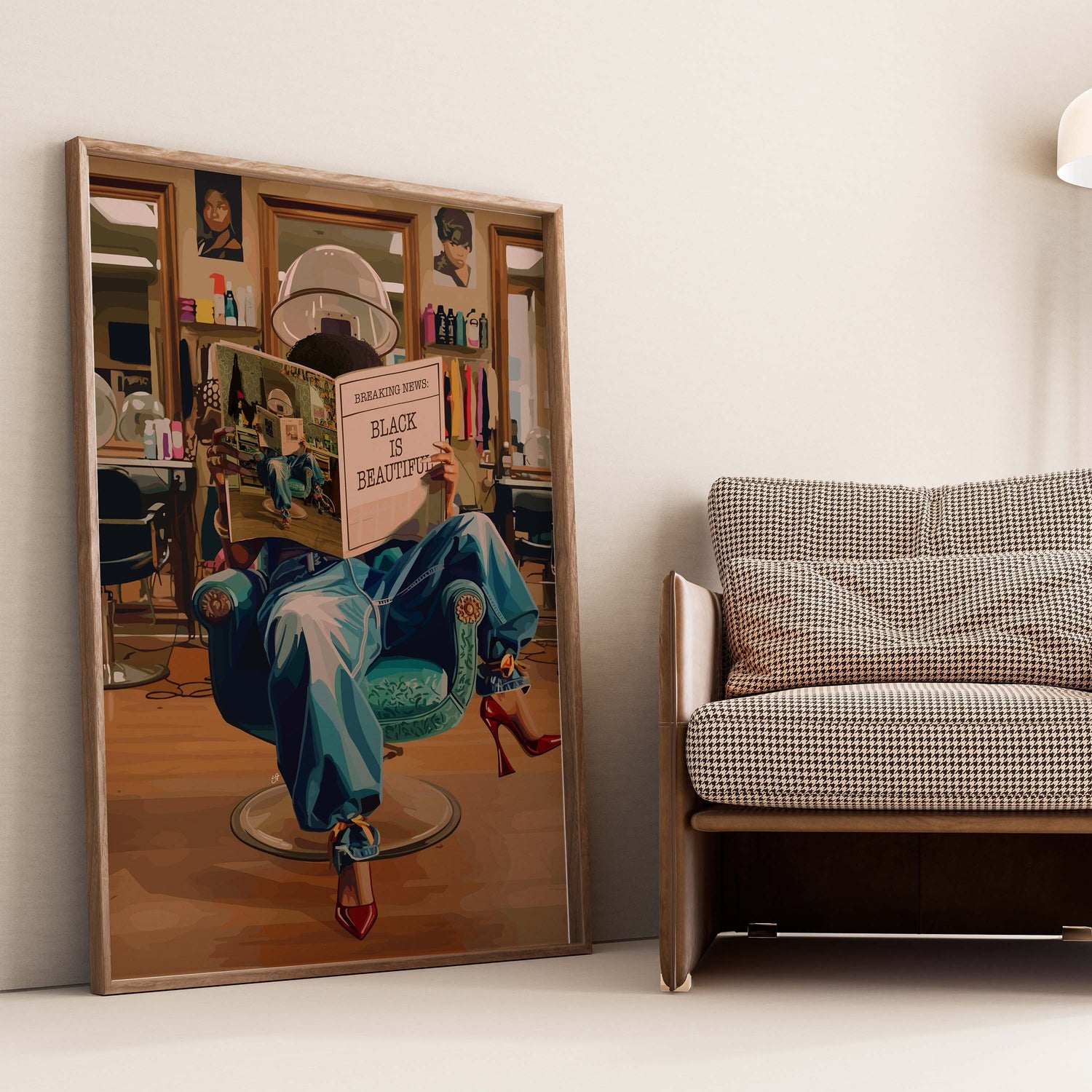
Young adulthood is a period of identity formation. Values are questioned, beliefs are refined, and self-perception evolves. During this phase, environment matters deeply — including what is displayed on the walls.
Black History wall art plays a subtle but powerful role in shaping identity for young adults, especially in dorms, first apartments, and personal workspaces.
Identity Is Built Through Repetition
Identity doesn’t form in one moment. It forms through repeated exposure to ideas, values, and representations.
What young adults see every day reinforces:
- Who they believe they can be
- What they believe matters
- Where they feel they belong
Black wall art reinforces identity by keeping cultural narratives visible during a formative life stage.
Representation Counters External Messaging
Young adults are constantly absorbing messages from social media, advertising, and popular culture — many of which exclude or stereotype Black experiences.
Cultural art acts as a counterbalance.
It reminds viewers of:
- Excellence beyond stereotypes
- History beyond trauma
- Identity beyond limitation
Seeing empowering imagery daily helps young adults resist negative narratives and build self-defined confidence.
Living Spaces Become Self-Expression
Dorm rooms and first apartments are often the first spaces young adults fully control.
What they choose to display reflects how they see themselves — or who they are becoming.
Black History wall art in these spaces signals:
- Cultural pride
- Self-awareness
- Conscious identity
It allows young adults to visually claim their story.
Art as Quiet Affirmation
Not all affirmation needs to be spoken.
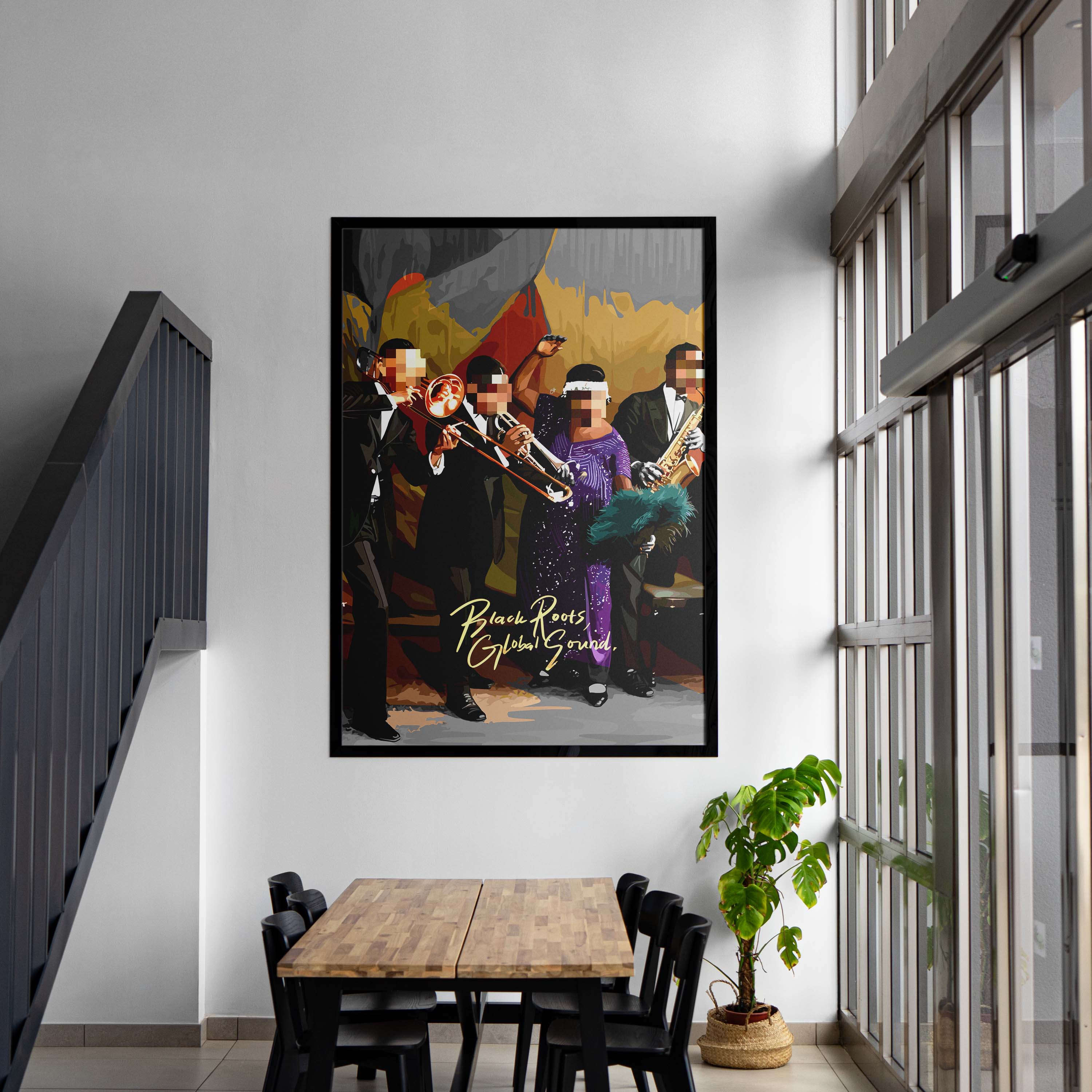
A symbolic print
A powerful quote
An abstract cultural piece
These visuals quietly reinforce resilience, ambition, and belonging.
In moments of stress, doubt, or transition, familiar imagery provides emotional grounding.
Walls become silent supporters.

Encouraging Cultural Literacy and Curiosity
Black History art doesn’t just affirm identity — it expands it.
Young adults often deepen their understanding of heritage during this stage of life. Wall art can prompt:
- Independent research
- Reflection on ancestry
- Exploration of social history
This turns living spaces into ongoing learning environments without formal instruction.
Normalizing Pride Without Performance
Young adults often resist anything that feels forced or performative.
Wall art allows cultural pride to exist quietly and authentically.
There is no announcement.
No obligation.
No explanation required.
The presence alone communicates confidence.
This normalization is especially important in shared spaces, where representation influences peer dynamics and mutual respect.
Supporting Mental and Emotional Well-Being
Identity affirmation is linked to mental well-being.
When young adults feel disconnected from cultural roots, it can contribute to anxiety, imposter syndrome, or low self-esteem.
Black wall art helps ground identity visually, reminding individuals that they come from strength, resilience, and creativity.
Environment becomes emotional support.
Carrying Identity Into Professional Life
The habits young adults form in personal spaces often carry into professional environments.
Those who normalize representation at home are more likely to:
- Advocate for inclusive spaces
- Value diverse perspectives
- Create culturally aware work environments
Wall art becomes an early lesson in intentional space-making.
Final Reflection
Young adulthood is about becoming.
What surrounds us during that process matters more than we realize.
Black History wall art shapes identity not by demanding attention, but by offering presence. It affirms, educates, and grounds young adults as they define who they are and where they belong.
Identity does not form in isolation.
It forms in environments.
And when walls reflect heritage, confidence grows.


Leave a comment
This site is protected by hCaptcha and the hCaptcha Privacy Policy and Terms of Service apply.