


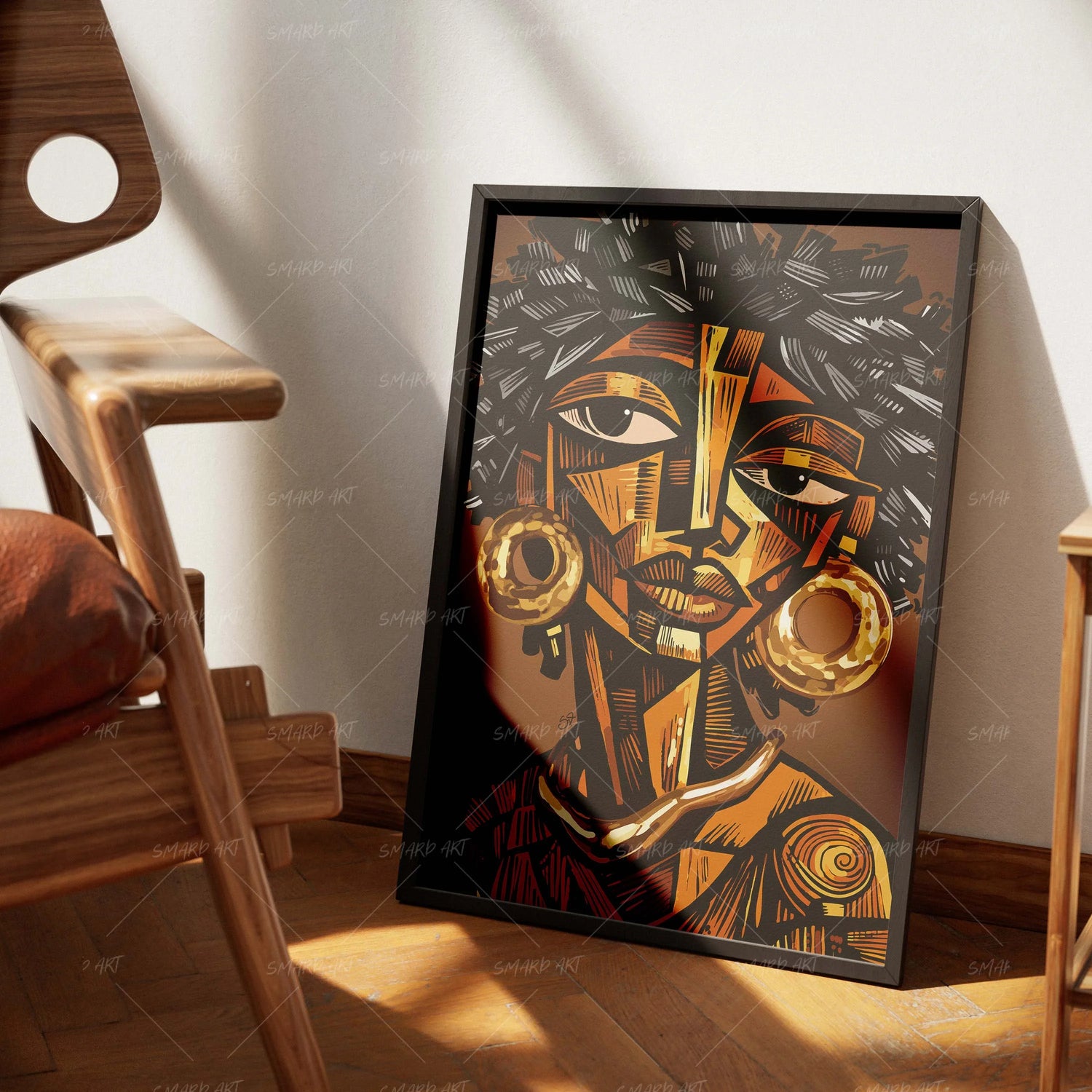
Teaching children about Black history should not feel limited to textbooks or a single month of the year. Learning is most powerful when it is continuous, visible, and woven into daily life. One of the most effective — and often overlooked — tools for cultural education is wall art.
Black History Month classroom decor and African American wall art for kids can turn homes and learning spaces into living environments of representation and inspiration.
Here are eight intentional ways to use wall art to teach children about Black history in meaningful and lasting ways.
1. Use Portrait Art to Introduce Historical Figures
Children connect strongly to faces and stories.
Displaying portrait wall art of influential Black leaders — such as Harriet Tubman, Martin Luther King Jr., Rosa Parks, or Frederick Douglass — makes history personal.
Instead of abstract names in a book, children see real people on their walls.
This encourages questions like:
- Who was this?
- What did they do?
- Why are they important?
Portrait art transforms history into visual storytelling.
2. Incorporate Quotes That Reinforce Values
Inspirational quotes from Black leaders make powerful teaching tools.
For example:
- Quotes about equality teach fairness.
- Quotes about perseverance teach resilience.
- Quotes about education teach ambition.
When displayed in study areas, bedrooms, or classrooms, these quotes become daily affirmations.
Children absorb repeated messages. Over time, those messages shape mindset.
Black wall art with meaningful typography becomes more than decoration — it becomes character development.
3. Introduce Cultural Symbols and Explain Their Meaning
Symbols are easier for children to understand than abstract historical timelines.
For example:
- The Sankofa symbol teaches the importance of learning from the past.
- The raised fist represents strength and unity.
- The African continent silhouette encourages conversations about heritage.
Displaying symbolic African American wall art and taking time to explain the meaning turns walls into interactive lessons.
Learning becomes visual and memorable.
4. Create a “History Corner” at Home
Designate a small area of your home as a cultural learning space.
This could include:
- A framed historical portrait
- A symbolic art print
- Books by Black authors
- A world map highlighting Africa
A consistent space reinforces the importance of history beyond a single lesson.
When children see cultural representation regularly, they internalize its value.
5. Rotate Art to Highlight Different Stories
Instead of keeping the same artwork permanently, consider rotating educational prints every few months.
For example:
- February: Civil Rights leaders
- April: Black inventors and scientists
- June: Cultural icons in music and arts
- September: Black entrepreneurs and innovators
This keeps engagement high and expands learning beyond familiar names.
Rotating Black History Month decor throughout the year ensures education remains ongoing.

6. Encourage Children to Research the Art They See
When children notice a new piece of wall art, encourage them to research it.
Ask them to:
- Present a short summary about the person featured
- Explain what a symbol represents
- Share why the quote resonates with them
Wall art becomes a starting point for independent learning.
This builds research skills while reinforcing cultural knowledge.
7. Integrate Art into Classroom Discussions
For teachers, Black History Month classroom decor can support lesson plans.
Rather than separate decoration from curriculum, align the two.
For example:
- Discuss civil rights movements while referencing displayed portraits.
- Explore African history while examining symbolic artwork.
- Analyze quotes during writing assignments.
Visual reinforcement improves retention.
Students are more likely to remember lessons when they see them reflected around them.
8. Make Representation Feel Normal, Not Exceptional
One of the most important lessons children can learn is that Black history is not separate from general history.
Displaying African American wall art year-round normalizes representation.
It communicates:
- Black excellence is foundational.
- Cultural contributions are part of everyday life.
- History is diverse and interconnected.
When representation feels ordinary rather than occasional, children grow up with a broader, healthier understanding of society.
Why Visual Learning Matters
Children process visual information faster than text.
Studies consistently show that visual cues improve memory and comprehension. Wall art leverages this by:
- Reinforcing themes daily
- Encouraging curiosity
- Creating emotional connections
- Making learning immersive
Black wall art transforms passive spaces into educational environments.
Beyond February
Black History Month is a starting point — not an endpoint.
When families and educators integrate cultural decor throughout the year, children develop:
- Stronger identity awareness
- Greater empathy
- Deeper historical understanding
- Increased cultural appreciation
Education becomes embedded in environment.
And environment shapes growth.
Final Reflection
Teaching Black history should not feel like a special project. It should feel like a natural part of home and classroom life.
Wall art makes that possible.
By surrounding children with empowering imagery, meaningful symbols, and influential leaders, we turn walls into teachers.
And those lessons last far beyond February.


Leave a comment
This site is protected by hCaptcha and the hCaptcha Privacy Policy and Terms of Service apply.