


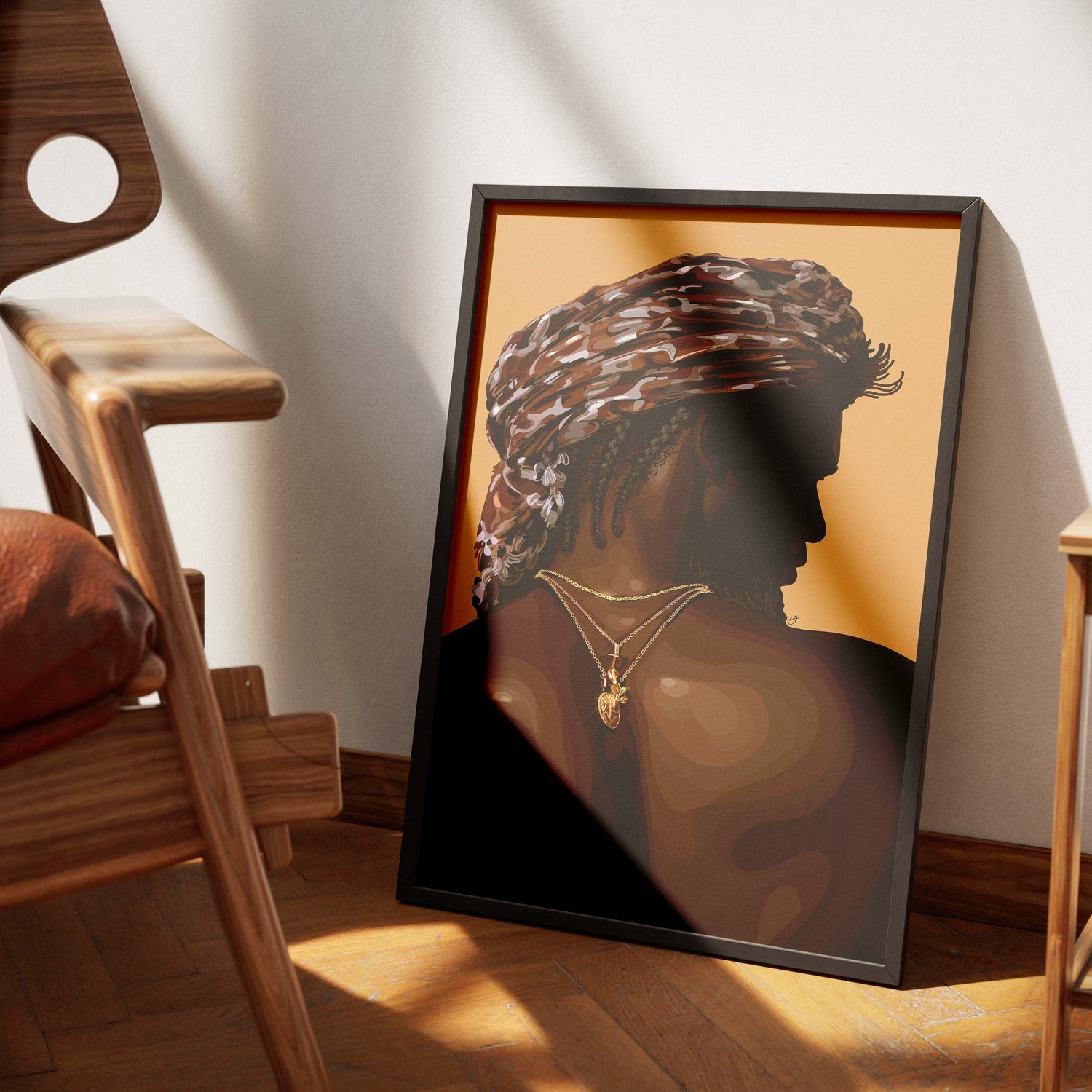
Home is more than shelter.
It is where values are reinforced, memories are formed, and identity quietly takes shape over time. The objects we choose to live with — especially what we place on our walls — communicate meaning long before words do.
Black History wall art plays a powerful role in shaping identity at home, not through instruction, but through presence.
Identity Is Formed Through Environment
Identity does not appear fully formed. It is influenced daily by surroundings, representation, and reinforcement.
When Black history is visible in the home:
- Cultural identity feels affirmed
- Belonging feels natural rather than conditional
- History becomes personal, not abstract
Walls help answer the question: Who am I allowed to be here?
1. Normalizing Representation Instead of Treating It as Special
When Black history appears only during designated moments, it risks feeling temporary or symbolic.
Wall art changes that dynamic by making representation:
- Consistent
- Everyday
- Expected
This normalization communicates that Black history is not an exception — it is foundational.
Over time, this shapes self-perception in subtle but lasting ways.
2. Reinforcing Cultural Pride Without Explanation
Art does not require justification.
Black History wall art allows cultural pride to exist without needing to be explained, defended, or contextualized for others. It simply is.
That quiet confidence matters. It teaches that pride does not need permission.
3. Creating Intergenerational Continuity
Homes often serve as bridges between generations.
Wall art referencing Black history invites:
- Storytelling
- Memory sharing
- Cultural transmission
Children grow up surrounded by visual cues that connect them to a larger narrative. Adults are reminded that they are part of a continuum, not an isolated moment.
Identity deepens when it feels rooted.

4. Supporting Emotional Safety and Belonging
Representation contributes to emotional safety.
When people see themselves reflected in their space, it reinforces the idea that they belong — fully and unapologetically.
Black History wall art can:
- Reduce feelings of invisibility
- Affirm cultural worth
- Strengthen emotional grounding
Belonging is not abstract. It is environmental.
5. Allowing Identity to Evolve Without Erasure
Identity is not static.
Wall art provides a stable reference point while allowing personal interpretation to evolve. The meaning changes as the viewer grows — without the history disappearing.
This balance between permanence and growth supports healthy identity development.
Why Homes Matter More Than Institutions
Schools, museums, and public spaces are important — but home is where identity is rehearsed daily.
When Black history lives on the walls of a home, it becomes:
- Familiar rather than distant
- Lived rather than studied
- Personal rather than institutional
This familiarity builds confidence that extends outward.
Beyond Decoration: Intentional Living
Choosing Black History wall art is not just a design decision.
It is an intentional act of identity reinforcement — one that shapes how people see themselves long before they are asked to define who they are.
Final Reflection
Homes teach us who we are allowed to be.
Black History wall art ensures that identity is shaped with visibility, dignity, and continuity — not silence.
What lives on the wall quietly lives in the mind.

Leave a comment
This site is protected by hCaptcha and the hCaptcha Privacy Policy and Terms of Service apply.