


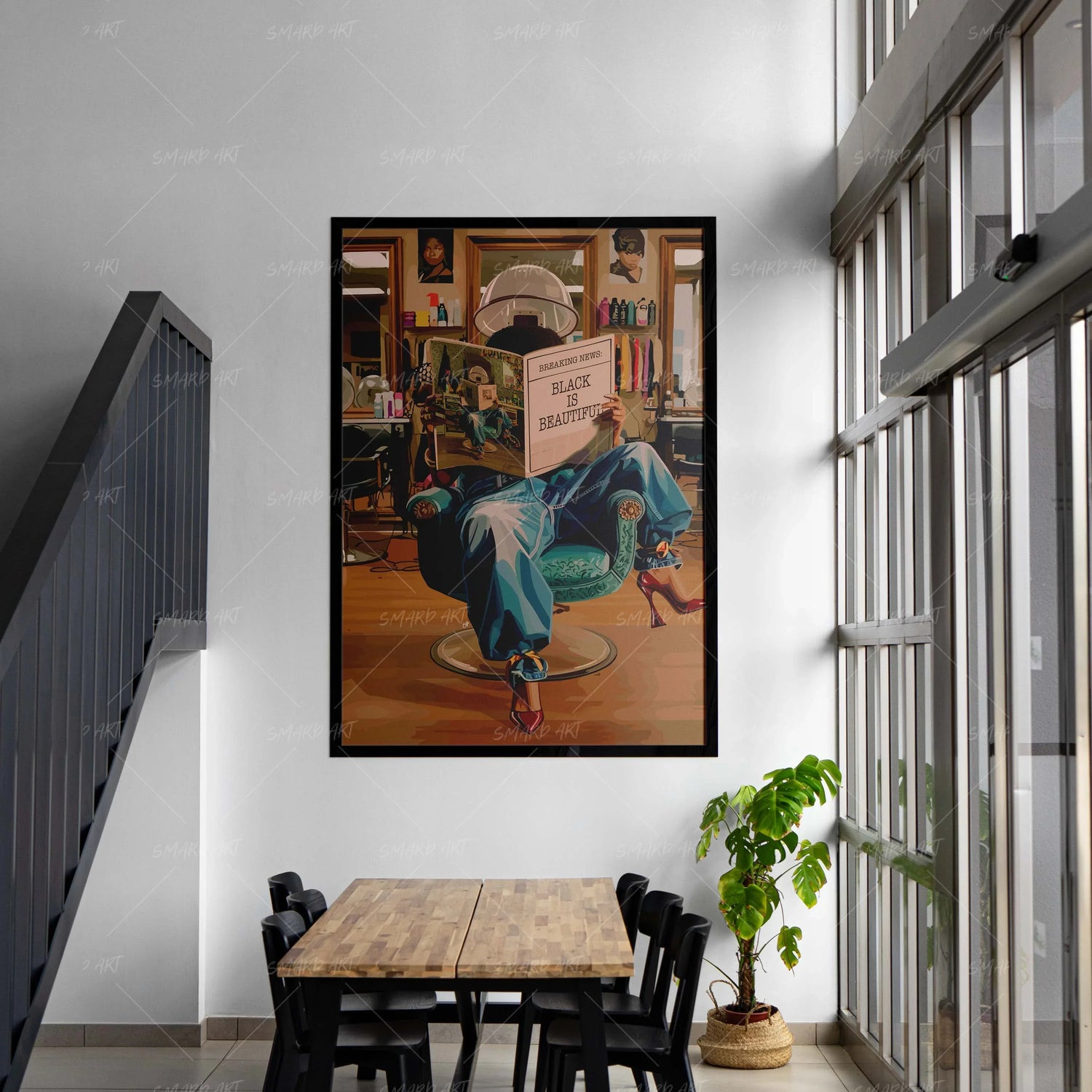
History is rarely neutral.
What gets recorded, repeated, and remembered is often shaped by power, access, and perspective. For Black communities, this has meant that many stories were simplified, softened, or excluded entirely from dominant historical narratives.
Black History wall art plays a vital role in reclaiming those untold and under-told narratives.
Not loudly, not confrontationally — but persistently and visually.
Walls can speak truths that textbooks sometimes omit.
The Problem With “Official” History
Traditional historical narratives often focus on milestones rather than lived experiences. They highlight moments of progress without fully addressing the struggle, creativity, resistance, and humanity behind them.
As a result:
- Complex identities are flattened
- Cultural contributions are minimized
- Historical trauma is glossed over
This leaves gaps — and gaps create misunderstanding.
Wall art steps into those gaps.
1. Visual Storytelling Restores Context
A single image can restore context that paragraphs of text cannot.
Black History wall art often depicts:
- Everyday life, not just famous moments
- Emotion, not just achievement
- Community, not just individuals
These visuals reframe history as lived experience rather than distant abstraction.
Context brings truth closer.
2. Art Highlights Stories Beyond the “Firsts”
Mainstream narratives often focus on “firsts” — the first Black leader, the first Black achievement — as if history only matters when it intersects with dominant systems.
Wall art expands the narrative by honoring:
- Cultural continuity
- Collective resilience
- Everyday excellence
This reframes Black history as complete in itself, not dependent on comparison.
3. Reclaiming Narrative Through Self-Representation
Who tells the story matters.
Black History wall art created from within the culture reflects self-definition rather than external interpretation. It resists stereotypes and reclaims agency.
Self-representation:
- Restores dignity
- Corrects distortion
- Centers authenticity
This is narrative ownership.
4. Art as a Counter-Archive
Not all history survives in written form.
Art becomes an archive of emotion, memory, and meaning. It preserves cultural knowledge that might otherwise be lost — symbols, expressions, and values passed visually across generations.
Walls become living archives.

5. Challenging Silence Through Presence
Silence is one of the most powerful tools of erasure.
Wall art disrupts silence simply by existing. It insists on being seen. It makes absence visible by refusing to disappear.
Presence itself becomes resistance.
6. Making Complex History Accessible
Not everyone has access to academic history or the time to engage deeply with texts.
Wall art democratizes storytelling. It allows people to engage with history intuitively, emotionally, and at their own pace.
Understanding grows through exposure.
7. Carrying Stories Forward, Not Backward
Reclaimed narratives are not about dwelling in the past — they are about informing the future.
Black History wall art carries stories forward, allowing them to evolve, inspire, and guide future generations.
Reclaimed history becomes active history.
Final Reflection
Every wall tells a story.
Black History wall art ensures those stories are fuller, truer, and more complete than what history alone has allowed.
When narratives are reclaimed visually, they are no longer fragile — they are lived with, remembered, and passed on.


Leave a comment
This site is protected by hCaptcha and the hCaptcha Privacy Policy and Terms of Service apply.