


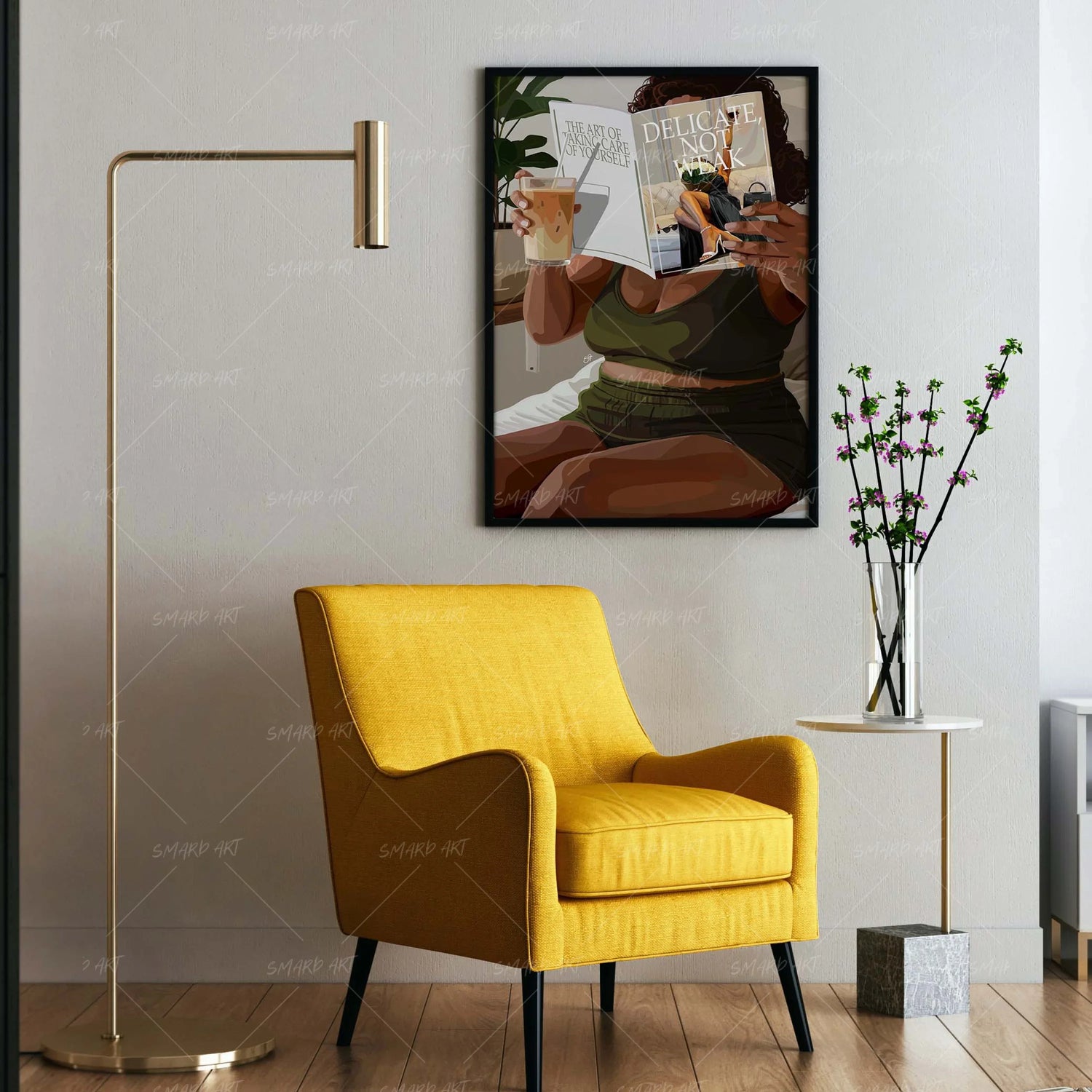
Most people believe furniture defines how a home feels. Sofas determine comfort. Beds define rest. Tables organize life.
But emotionally? Walls have more power than furniture ever will.
Walls occupy the largest visual surface in a home. You may sit on a couch, but you live inside your walls. What they show—or don’t show—quietly shapes your mood every single day.
This is why wall art isn’t decorative fluff. It’s emotional architecture.
Smard.art understands this deeply, especially through its approach to black wall art, which is designed to ground, calm, and stabilize interior spaces.
Why the Brain Prioritizes Walls Over Objects
The human brain scans environments vertically before horizontally. This means:
- Walls are processed before furniture
- Empty walls signal incompleteness
- Visually chaotic walls increase mental fatigue
Furniture supports function. Walls influence state of mind.
A room can have the most expensive furniture in the world and still feel anxious, cold, or unfinished if the walls are neglected.
Empty Walls Create Emotional Noise
When walls are blank:
- The brain keeps searching for meaning
- Spaces feel temporary
- Rooms feel emotionally unfinished
This creates subtle stress. People often describe it as “something feels off,” without knowing why.
Wall art solves this by giving the mind a place to rest.
Why Wall Art Changes Mood Instantly
Wall art works faster than furniture because:
- It’s processed subconsciously
- It affects perception, not logic
- It anchors emotional tone
Black wall art is especially powerful. Black absorbs visual noise. It stabilizes rooms and introduces emotional calm without demanding attention.
Smard.art’s black wall art is designed to hold space, not fight for it.

Furniture Supports the Body. Wall Art Supports the Mind.
Furniture answers questions like:
- Where do I sit?
- Where do I sleep?
Wall art answers deeper questions:
- Is this space safe?
- Is this space intentional?
- Do I belong here?
Homes without wall art often feel functional but emotionally hollow.
Why Black Wall Art Feels Calming, Not Heavy
There’s a misconception that black feels dark or oppressive. In reality:
- Black provides visual certainty
- Black reduces overstimulation
- Black creates emotional grounding
That’s why black wall art works so well in modern homes, rental spaces, and open layouts.
Smard.art uses black wall art as a psychological anchor, not a decorative accent.
How Mood Shifts Room by Room
Wall art affects mood differently depending on placement:
- Living room: Stability, welcome, connection
- Bedroom: Calm, grounding, intimacy
- Workspace: Focus, clarity, authority
Furniture alone can’t do this. Walls carry emotional memory.
Why People Feel Better After “Just Hanging Art”
Many homeowners report feeling calmer after adding wall art, even when nothing else changes. This happens because:
- The space finally feels complete
- Visual tension disappears
- Emotional closure is achieved
This is why wall art is often the missing piece—not the couch, not the rug.
Final Thought
Your walls speak to your nervous system every day. Furniture supports living, but walls shape feeling.
By choosing intentional wall art—especially black wall art from Smard.art—you’re not decorating.
You’re designing emotional well-being.

Leave a comment
This site is protected by hCaptcha and the hCaptcha Privacy Policy and Terms of Service apply.