


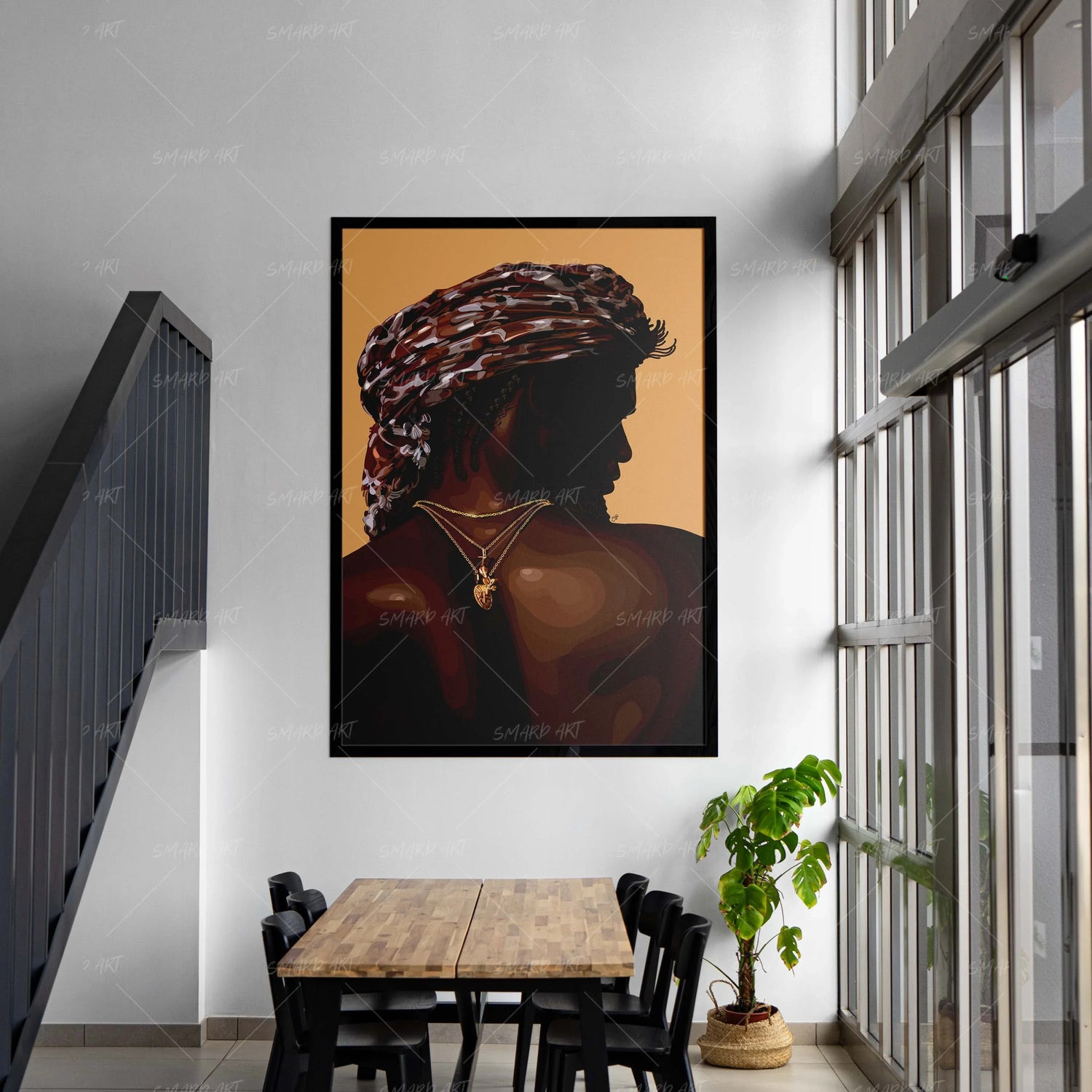
Modern homes are not neutral spaces.
They reflect values, priorities, and identity — even when those values are not spoken aloud. What is placed on the walls communicates just as much as what is said in conversation.
Black History wall art matters in modern homes because it shapes how history, culture, and identity are lived daily rather than remembered occasionally.
Homes as Cultural Mirrors
A home is one of the first environments where people learn what matters.
The images displayed communicate what is worthy of attention, pride, and remembrance. When Black history is present, it sends a clear message that cultural legacy is not distant or ceremonial — it is part of everyday life.
Walls become mirrors of belief.
Why Neutral Design Is Rarely Neutral
Minimalist or “neutral” décor often reflects dominant cultural defaults.
When Black history is excluded in the name of neutrality, it unintentionally reinforces cultural absence. Black History wall art challenges this by reintroducing history into spaces that may otherwise erase it through silence.
Presence corrects imbalance.
Living With History, Not Just Studying It
Many people engage with Black history only through schools or special observances.
Wall art shifts that engagement from occasional to continuous. It allows history to be lived alongside daily routines — seen in passing, absorbed subconsciously, and reinforced emotionally.
This consistency deepens connection.
Identity Reinforcement Through Environment
Environment shapes identity.
When individuals see their history reflected at home, it reinforces self-understanding and cultural grounding. It communicates that their story is worthy of space, permanence, and pride.
This reinforcement happens quietly but powerfully.

Creating Intentional Spaces
Modern homes are increasingly intentional.
People curate their spaces carefully, choosing items that align with their beliefs and aspirations. Black History wall art transforms décor into intention — signaling awareness, respect, and cultural literacy.
Intentional spaces feel grounded.
Why Representation at Home Affects Future Generations
Children learn visually before they learn formally.
Growing up surrounded by cultural representation normalizes history rather than exceptionalizing it. It teaches children that their story is foundational, not supplemental.
This early exposure shapes confidence and belonging.
Art as a Daily Reminder of Continuity
Black history is not confined to the past.
Wall art reinforces the idea that history is ongoing — connected to the present and shaping the future. Seeing this continuity daily prevents history from becoming static or disconnected.
Continuity strengthens identity.
The Emotional Safety of Representation
Representation fosters emotional safety.
Spaces that reflect cultural truth feel more welcoming, grounded, and affirming. Black History wall art contributes to this emotional atmosphere by validating presence rather than questioning it.
Safety enables authenticity.
Final Reflection
Modern homes tell stories.
Black History wall art ensures those stories include truth, continuity, and cultural depth — not just aesthetics.
What lives on the walls lives in the people who inhabit the space.

Leave a comment
This site is protected by hCaptcha and the hCaptcha Privacy Policy and Terms of Service apply.