


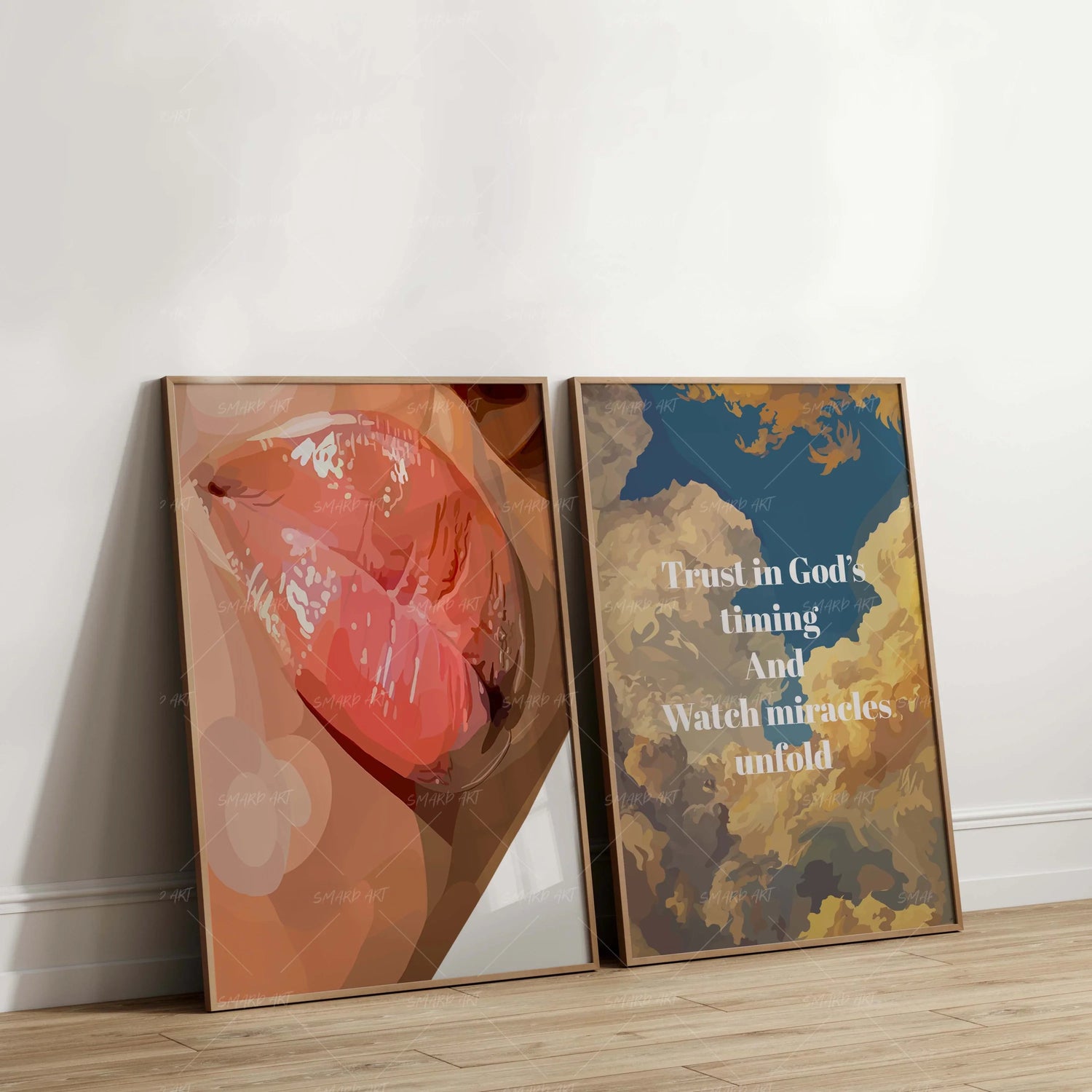
How to Style Wall Art Around Furniture, Lighting, and Space Flow
Successful wall art styling goes beyond choosing beautiful pieces—it requires understanding how the artwork interacts with the room’s architecture, furniture layout, and lighting conditions. When these elements work together, the space feels intentional, balanced, and harmonious.
Below is a comprehensive guide to styling art around the key components of a room.
1. Align Wall Art With Furniture Proportionally
Furniture and wall art should feel visually connected. Disconnection creates awkward negative space.
Follow these proportional guidelines:
- Art should be 60–75% of the furniture width
- Center the art over the furniture, not the wall
- Keep spacing between furniture and art at 6–10 inches
Correct proportion makes the space feel structured and elegant.
2. Position Art at Eye Level for Best Flow
The art’s center should sit between 57–60 inches from the floor. This aligns the artwork with natural sightlines, creating smoother visual flow.
Too high = disconnected
Too low = heavy and cramped
Proper height anchors the art within the room.
3. Use Lighting to Highlight Key Pieces
Lighting can transform the way art looks, adding drama and definition.
Effective lighting approaches:
- Track lights
- Picture lights
- Floor lamps angled toward the art
- Soft warm ambient lighting
SmardArt’s textured and deep-toned artworks respond particularly well to directional lighting.

4. Consider Traffic Flow and Sightlines
Your wall art should enhance movement, not interfere with it. Place significant artworks where they’re visible from key entry points.
Good sightline placements include:
- Opposite the entrance
- Above central furniture
- Along hallways
- Facing seating areas
Art placed within sightlines creates cohesive flow throughout the home.
5. Match Art Style to Furniture Mood
Modern furniture pairs best with minimalist or black art.
Soft furniture pairs well with warm, textured, or earth-toned prints.
Industrial elements pair with sharp, bold, highly contrasted art.
Matching style creates harmony; complementary contrast creates interest. Both approaches work when intentional.
Conclusion
Styling wall art successfully requires balance between furniture, lighting, and spatial flow. When these elements align, the room feels both functional and beautifully curated.

Leave a comment
This site is protected by hCaptcha and the hCaptcha Privacy Policy and Terms of Service apply.