


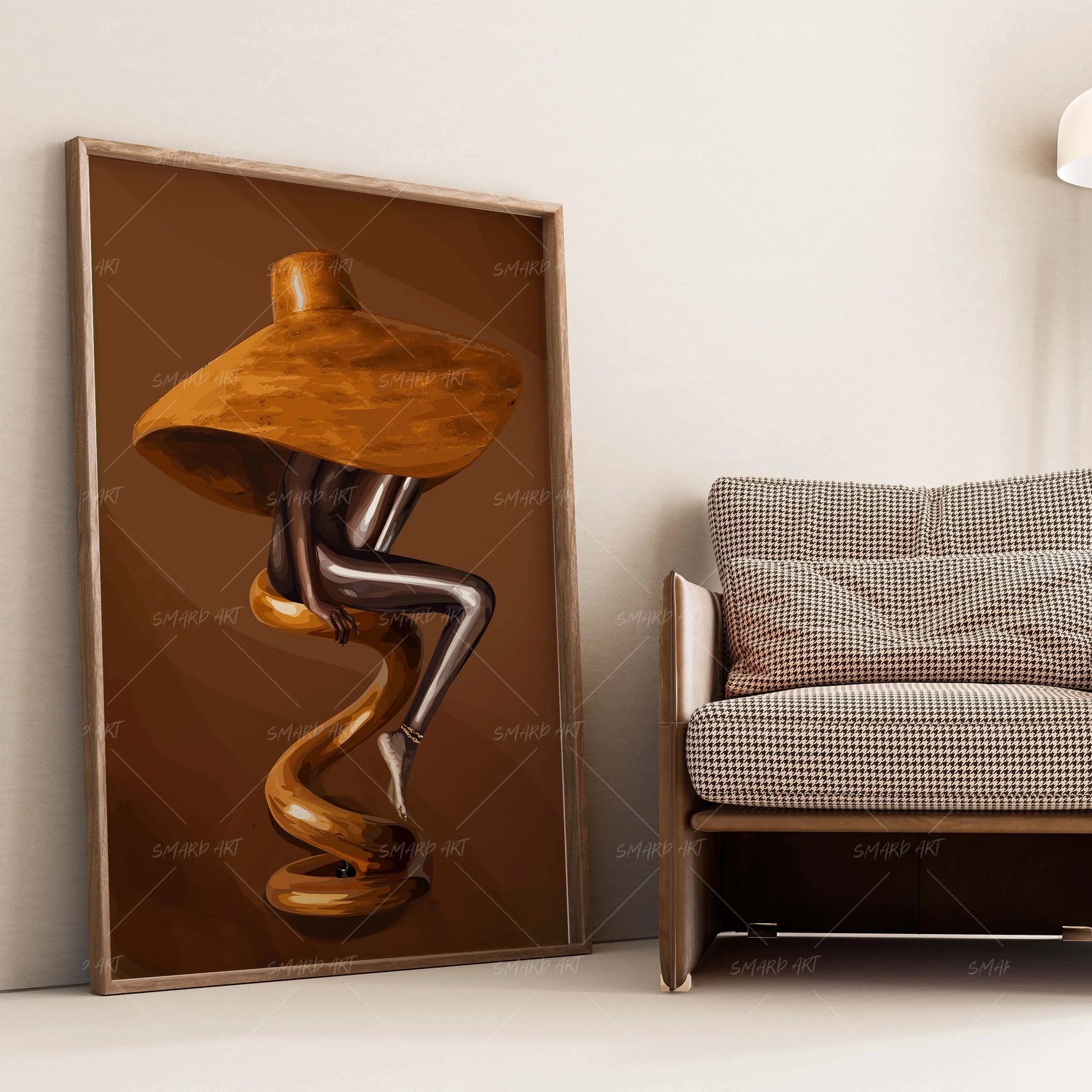
Cultural memory is fragile.
It does not only live in books, archives, or museums. It survives through repetition, visibility, and everyday presence. When stories are not seen, they slowly fade — not because they are unimportant, but because they are not reinforced.
This is where Black History wall art becomes essential, not decorative.
It acts as a quiet guardian of memory.
Cultural Memory Lives in the Everyday
Memory is not sustained by rare encounters. It is sustained by daily reminders.
When Black history appears consistently in living spaces, workspaces, and communal environments, it stops feeling distant or ceremonial. It becomes lived knowledge rather than archived information.
Wall art turns memory into something encountered naturally, not studied formally.
Visual Memory Is Stronger Than Written Memory
Images linger longer than text.
Long after facts fade, visuals remain — expressions, symbols, posture, emotion. Black History wall art embeds memory in ways that reading alone often cannot.
This is especially important for histories that were interrupted, erased, or misrepresented. Art fills in emotional truth where written records may be incomplete.
Preserving Stories That Were Never Fully Recorded
Much of Black history exists outside traditional documentation. Oral histories, community experiences, and cultural knowledge were often excluded from official records.
Wall art becomes a form of preservation for those stories.
It does not require footnotes to validate its importance. Its presence alone asserts that the memory matters.
Intergenerational Transmission Without Instruction
One of the most powerful aspects of wall art is that it teaches without teaching.
Children grow up seeing cultural history as part of their environment, not as a separate subject. Adults reconnect with narratives they may not have encountered formally.
Memory passes naturally — without lesson plans, without explanations, without resistance.

Why Memory Needs Visibility to Survive
Silence is the greatest threat to memory.
When history is not visible, it is easier to forget. When it is not present in daily life, it becomes optional rather than essential.
Black History wall art resists that silence by occupying space — calmly, confidently, and continuously.
Cultural Memory as Emotional Grounding
Memory is not just informational. It is emotional.
Seeing one’s history represented fosters grounding, reassurance, and continuity. It reinforces the understanding that current experiences are connected to something larger and longer-lasting.
That emotional grounding strengthens identity.
From Preservation to Protection
Preserving memory is not passive. It is protective.
Black History wall art protects cultural narratives from being simplified, distorted, or erased over time. It safeguards complexity by allowing stories to exist visually, without needing approval.
Memory that is protected visually is harder to rewrite.
Why This Matters Now
In an era of rapid information cycles and digital overload, memory risks becoming shallow.
Wall art offers permanence in contrast to constant change. It anchors culture in physical space, ensuring that memory remains stable even as trends shift.
Final Reflection
Cultural memory survives through presence.
Black History wall art ensures that memory is not fragile, temporary, or optional — but visible, lived, and carried forward.
What remains on the wall remains in the culture.

Leave a comment
This site is protected by hCaptcha and the hCaptcha Privacy Policy and Terms of Service apply.