


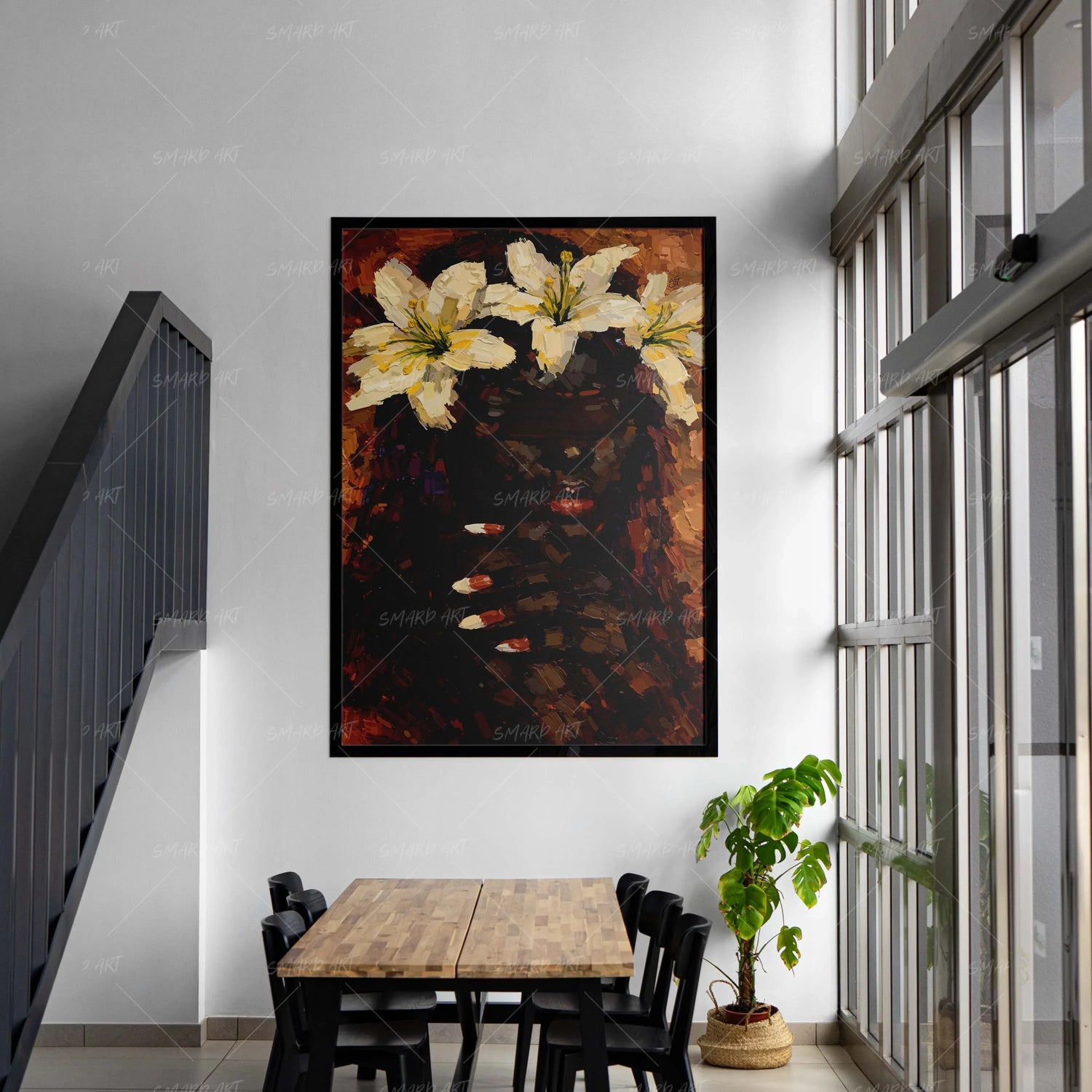
Education does not only happen in classrooms.
Some of the most impactful learning happens quietly, without lesson plans, exams, or lectures. It happens through exposure, curiosity, and repeated interaction. Black History wall art plays a powerful educational role by embedding knowledge into everyday environments.
Black History wall art educates without a classroom by making learning visible, accessible, and continuous.
Learning Through Everyday Exposure
People learn what they repeatedly see.
When history is present on walls, it becomes part of daily life rather than an isolated topic. This repetition reinforces memory and familiarity without requiring effort or intention.
Learning becomes passive but powerful.
Removing Barriers to Access
Not everyone engages with history through books or formal education.
Wall art removes barriers related to literacy, time, or academic background. Visual storytelling allows people of all ages to engage with historical narratives instantly.
Accessibility strengthens education.
Curiosity as a Learning Trigger
Art invites questions.
A single image can prompt curiosity about people, events, or movements that may otherwise go unexplored. This curiosity often leads to deeper independent learning.
Questions open doors.
Education Without Pressure
Traditional education can feel intimidating.
Wall art offers a low-pressure way to engage with history. There is no expectation to understand everything at once — learning unfolds naturally.
Comfort encourages engagement.

Visual Memory and Retention
Images stay with people longer than text.
Visual learning improves retention by creating emotional connections to information. Black History wall art makes history memorable by pairing facts with feeling.
Emotion anchors memory.
Teaching Through Presence, Not Performance
Education does not need to announce itself.
Wall art teaches simply by existing. It does not require facilitation, explanation, or instruction.
Presence becomes pedagogy.
Reaching Multigenerational Audiences
Different generations learn differently.
Wall art speaks across age groups simultaneously, allowing children, adults, and elders to engage with history together.
Shared learning builds connection.
Normalizing Historical Awareness
When history is visible, it becomes normalized.
Black History wall art integrates historical awareness into everyday spaces, reducing the sense that history is something separate or optional.
Normalization sustains knowledge.
Final Reflection
Education is most effective when it feels natural.
Black History wall art educates quietly, consistently, and inclusively — proving that learning does not require a classroom to be meaningful.
Sometimes, the walls are the teachers.


Leave a comment
This site is protected by hCaptcha and the hCaptcha Privacy Policy and Terms of Service apply.