



Cultural awareness is often framed as something learned formally — through education, training, or study.
But in reality, awareness develops through exposure.
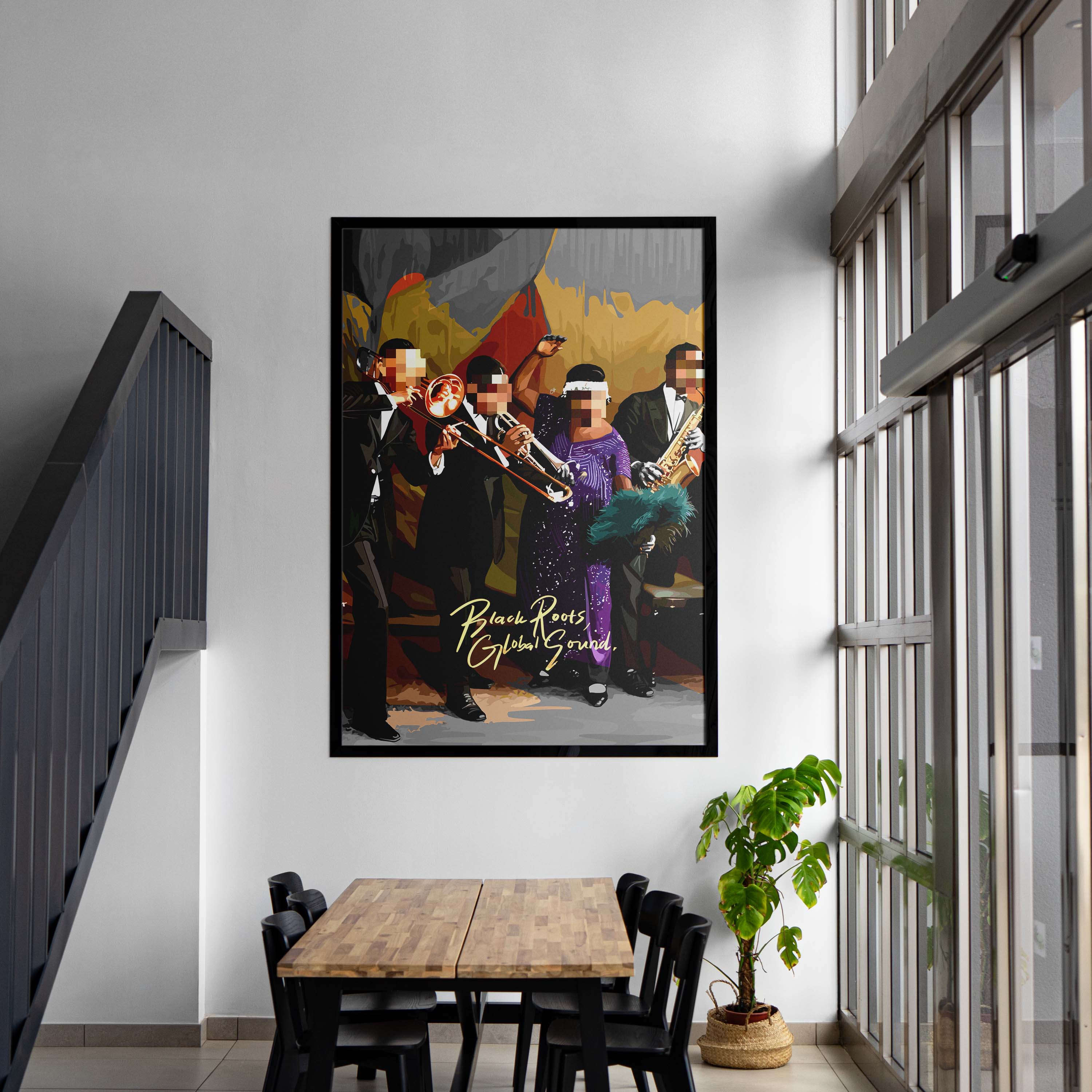
Black History wall art builds cultural awareness by placing history in everyday sightlines, where learning happens naturally.
Awareness Begins With Encounter
People cannot engage with what they never encounter.
When Black history is absent from visual environments, it remains distant. Wall art changes that by introducing narratives into spaces where people already are — living, working, gathering.
Encounter precedes understanding.
Art Creates Low-Resistance Learning
One of the strengths of visual storytelling is that it lowers resistance.
Unlike lectures or required reading, wall art invites attention without pressure. Viewers can engage at their own pace, on their own terms.
This makes learning feel organic rather than imposed.
From Information to Emotional Understanding
Facts inform. Stories connect.
Black History wall art conveys emotion, resilience, complexity, and humanity — elements that facts alone cannot fully express. Emotional engagement deepens awareness and makes it memorable.
People remember what they feel.
Why Cultural Awareness Must Exist Outside Institutions
Schools and museums are important — but they are not enough.
Cultural awareness must exist in the spaces where people spend most of their time. Wall art extends learning into daily life, reinforcing awareness through repetition rather than isolation.
Learning becomes continuous.

Art as a Conversation Starter
Wall art often prompts questions.
A single image can lead to discussions, curiosity, and deeper exploration. These conversations happen naturally — without agenda — making awareness social rather than instructional.
Dialogue strengthens understanding.
Challenging Simplified Narratives
Much of Black history has been simplified or compressed.
Wall art allows for nuance. It presents complexity visually, encouraging viewers to question oversimplified narratives and seek fuller context.
Awareness grows when narratives are expanded.
Cultural Awareness as Shared Responsibility
Awareness is not solely the responsibility of individuals from that culture.
When Black history is visible in shared spaces, it becomes part of collective knowledge. Everyone who encounters it participates in awareness, whether consciously or not.
This shared exposure builds cultural literacy.
Why Awareness Leads to Inclusion
Awareness is the foundation of inclusion.
When people understand history, context, and contribution, inclusion feels logical rather than forced. Wall art helps lay that foundation quietly and persistently.
Inclusion grows from understanding.
Final Reflection
Cultural awareness is not a single moment of learning.
It is built over time, through presence, exposure, and engagement.
Black History wall art ensures that awareness does not stay confined to classrooms — but lives where culture actually unfolds.


Leave a comment
This site is protected by hCaptcha and the hCaptcha Privacy Policy and Terms of Service apply.