


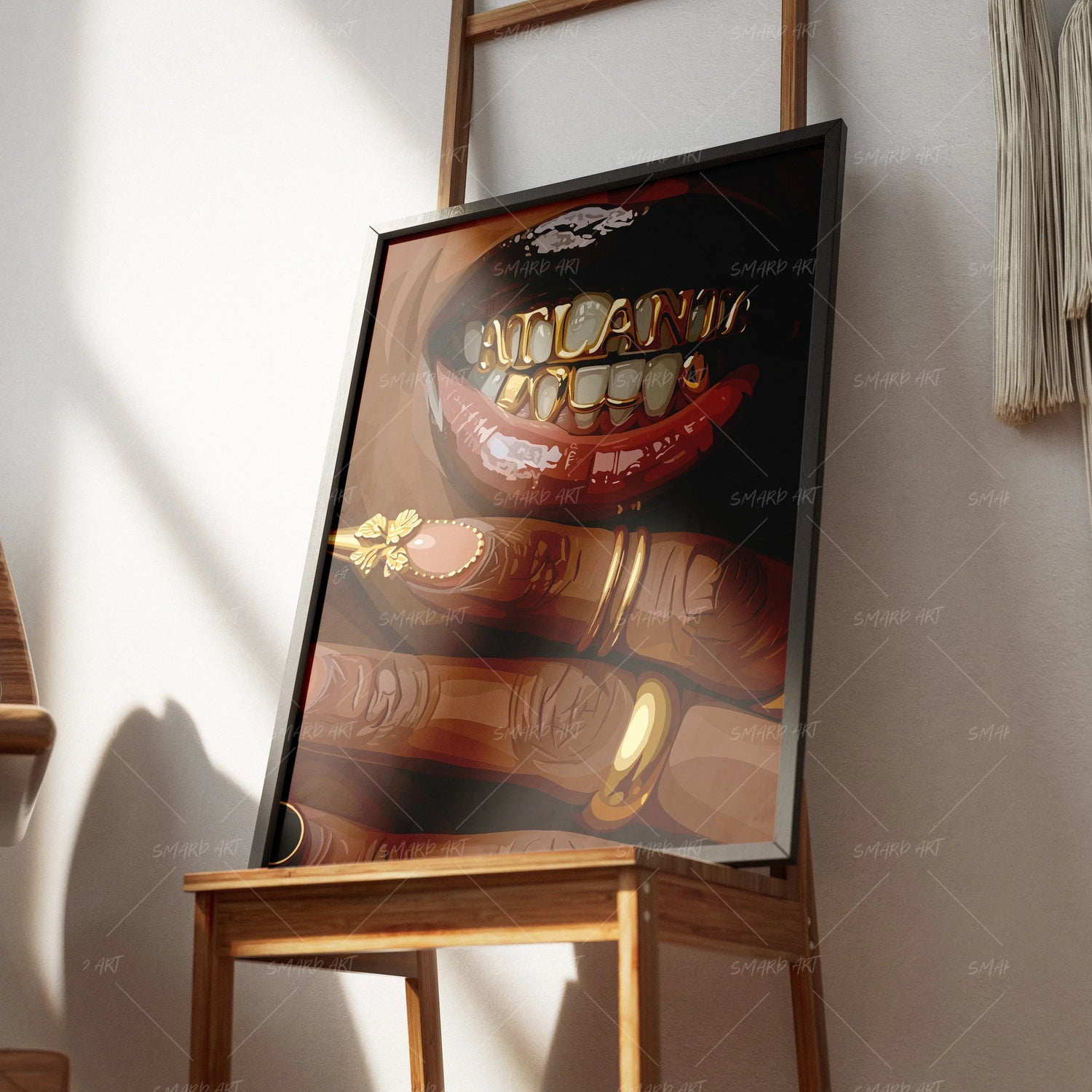
You found the perfect artwork.
It looked beautiful online.
The colors matched your home.
The subject spoke to you.
Then it arrived.
You carefully hung it on your wall, stepped back to admire it, and immediately thought:
"Why does it look so small?"
If you've had this experience, you're not alone.
Choosing the wrong artwork size is one of the most common decorating mistakes homeowners make. It doesn't mean you picked the wrong piece—it simply means the scale isn't working with your room.
The good news is that this mistake is easy to understand and even easier to avoid.
Whether you're decorating a living room, bedroom, hallway, or home office, choosing the right size Black wall art can completely change how your home feels.
In many cases, the artwork you love doesn't need to be replaced. It simply needs to be displayed differently or selected in a larger size.
Here's why wall art often looks too small and what professional interior designers do differently.
The Quick Answer
Wall art usually looks too small because it isn't proportional to the wall or the furniture around it.
Most homeowners underestimate how much visual space artwork should occupy.
As a result, the artwork appears to float on the wall instead of becoming part of the room's design.
Choosing larger artwork—or arranging multiple pieces together—often solves the problem immediately.
Why Most People Buy Artwork That's Too Small
Buying artwork online can be surprisingly difficult.
A product photo may show a beautiful print, but without seeing it in your own room, it's hard to judge its actual size.
Many people also assume it's safer to buy a smaller piece.
The thinking usually goes something like this:
"I'd rather buy something slightly too small than something that's too big."
Ironically, the opposite is often true.
Professional interior designers frequently recommend going larger because oversized wall art creates confidence and visual balance.
Small artwork, especially on large walls, often disappears.

Your Wall Is Bigger Than You Think
One reason artwork feels undersized is that we naturally focus on the artwork itself rather than the wall surrounding it.
Large walls create enormous amounts of negative space.
If the artwork occupies only a tiny portion of that wall, the empty areas become more noticeable than the artwork itself.
This is especially common:
- Above sofas
- Above beds
- Over dining tables
- In entryways
- On stairway walls
The larger the wall, the more visual presence your artwork needs.
Furniture Changes How Artwork Is Perceived
Artwork doesn't exist on its own.
It's always viewed in relation to nearby furniture.
For example, imagine a wide sectional sofa with a single small frame hanging above it.
The sofa dominates the room while the artwork struggles to compete.
Instead, the artwork should visually relate to the furniture below it.
Interior designers often recommend artwork that spans roughly two-thirds of the width of a sofa or bed.
This creates a balanced composition that feels intentional rather than accidental.
One Large Piece Often Works Better Than Several Small Ones
Many homeowners try to solve empty walls by adding multiple small frames.
Sometimes this works beautifully.
Often, it simply creates clutter.
One oversized Black wall art piece can have significantly more impact than four or five unrelated prints.
Large artwork:
- Creates a focal point
- Simplifies the room
- Makes ceilings feel higher
- Gives furniture visual support
- Makes the space feel professionally designed
If you're deciding between one large piece and several small ones, consider the size of your wall first.
Large walls usually benefit from larger artwork.
Gallery Walls Need Visual Balance Too
Gallery walls are wonderful, but they require planning.
One mistake people make is spacing artwork too far apart.
Instead of reading as one collection, each piece feels isolated.
The eye jumps from frame to frame without seeing a unified composition.
Keep spacing consistent.
Choose artwork connected by:
- Theme
- Color
- Style
- Subject
A well-designed gallery wall should feel like one complete installation rather than several unrelated pieces.
Height Matters Just as Much as Size
Even perfectly sized artwork can look wrong if it's hung too high.
When artwork sits far above the furniture, it appears disconnected from the room.
As a general guideline, artwork above a sofa should sit approximately six to ten inches above the back of the furniture.
This helps connect the wall art to the seating area and creates visual harmony.
Always step back and look at the room as a whole before making final adjustments.
Think Beyond the Frame
Artwork isn't just the image.
It's also the space around it.
Negative space allows the artwork to breathe.
At the same time, too much empty wall surrounding a small frame makes the artwork appear even smaller.
If your current artwork feels lost, ask yourself whether the issue is actually the amount of surrounding wall rather than the artwork itself.
Sometimes moving the piece to a narrower wall or grouping it with complementary artwork creates a much stronger result.
Black Wall Art Creates Stronger Visual Presence
One reason Black wall art works so well in modern interiors is its ability to command attention.
Against white, cream, beige, or light gray walls, darker artwork naturally creates contrast.
This visual strength makes the room feel more balanced.
Portraits, cultural artwork, lifestyle scenes, and statement pieces all benefit from this contrast because they immediately become part of the room's focal point.
Instead of blending into the background, they help define the space.

Measure Before You Buy
One of the easiest ways to avoid buying artwork that's too small is to measure your wall first.
Use painter's tape to outline the dimensions of the artwork you're considering.
Live with the outline for a day.
Walk past it.
Sit on the sofa.
Enter the room from different angles.
This simple exercise gives you a realistic idea of how the finished artwork will look.
Many homeowners discover they actually need a larger size than they originally planned.
Don't Be Afraid of Oversized Art
There's a common fear that large artwork will overwhelm a room.
In reality, the opposite is usually true.
Oversized wall art often creates calm because it reduces visual clutter.
Instead of several competing decorative pieces, one meaningful artwork becomes the room's anchor.
This is particularly effective in:
- Living rooms
- Bedrooms
- Dining rooms
- Entryways
- Home offices
Large artwork makes a statement without requiring dozens of decorative accessories.
Choose Meaning Over Measurements
While size matters, meaning matters even more.
The best artwork combines the right scale with personal connection.
Choose Black wall art that reflects:
- Your culture
- Your family
- Your experiences
- Your interests
- Your aspirations
When artwork tells your story, it becomes much more than decoration.
It becomes part of your home.
Why Smard Art Helps You Choose With Confidence
At Smard Art, we believe choosing wall art shouldn't feel overwhelming.
Our collections include artwork in multiple sizes, making it easier to find pieces that fit everything from cozy apartments to spacious family homes.
Our modern Black wall art celebrates culture, family, relationships, fashion, and everyday life while helping homeowners create rooms that feel balanced, meaningful, and beautifully designed.
Whether you're looking for a statement piece or planning a gallery wall, thoughtful sizing makes all the difference.
Final Thoughts
If your wall art looks too small, don't assume you've made a decorating mistake.
Often, it's simply a matter of proportion.
Large walls need artwork with confidence.
Furniture needs visual support.
Rooms need focal points.
By choosing the right size Black wall art—or thoughtfully grouping smaller pieces—you can transform a room that feels unfinished into one that feels complete.
Sometimes the difference between a good room and a great one isn't buying more decor.
It's choosing artwork that's bold enough to belong.
Frequently Asked Questions
Why does my wall art look too small?
It is usually out of proportion with the wall or nearby furniture. Choosing a larger piece or creating a gallery wall often solves the issue.
Is oversized wall art better?
For large walls, oversized wall art often creates better visual balance and a stronger focal point than several small pieces.
How do I know if my artwork is the right size?
Measure your wall and use painter's tape to outline the artwork before buying. Viewing the outline from different angles helps you judge the scale.
Can small artwork work on large walls?
Yes, but it usually works best when grouped into a cohesive gallery wall rather than displayed on its own.
What rooms benefit most from large wall art?
Living rooms, bedrooms, dining rooms, entryways, and home offices all benefit from oversized artwork because these spaces often have large uninterrupted wall areas.
Explore More from Smard Art
Discover collections designed to fit every space:
- Black Wall Art
- Oversized Wall Art
- Living Room Wall Art
- Bedroom Wall Art
- Gallery Wall Collections
- Modern Wall Art
Find artwork that fits your walls—and tells your story.

Leave a comment
This site is protected by hCaptcha and the hCaptcha Privacy Policy and Terms of Service apply.