


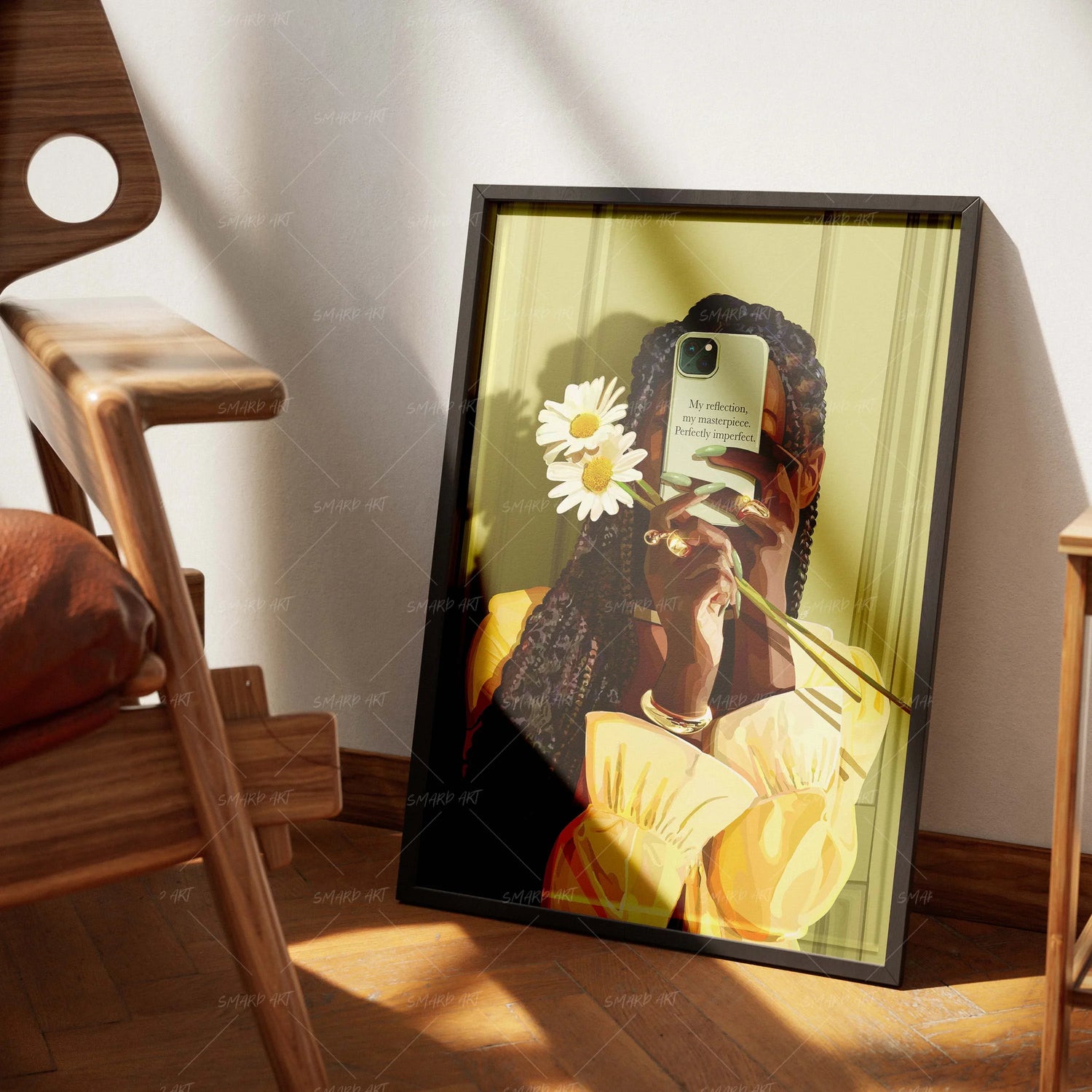
Education does not begin and end with formal instruction. It happens continuously — through environment, exposure, and experience.
Black History wall art is one of the most effective tools for cultural education because it teaches without demanding attention.
It simply exists — and that existence matters.
Visual Learning Is Universal
Humans are visual learners by nature.
Images are processed faster than text and remembered longer. Black History wall art leverages this by presenting cultural narratives in an accessible, engaging format.
A symbol can teach meaning.
A portrait can teach history.
A quote can teach values.
Education becomes intuitive.
Art Makes History Accessible
Many people feel disconnected from history because it feels distant or academic.
Wall art closes that gap.
It removes the barrier of formal learning and invites curiosity naturally. Viewers are free to engage at their own pace, ask questions, and reflect privately.
This accessibility makes cultural education more inclusive.
Encouraging Lifelong Learning
Cultural education should not stop after school.
When Black History wall art is present in adult spaces — homes, offices, community centers — learning continues organically.
A new piece sparks research.
A quote prompts reflection.
A symbol invites exploration.
Education becomes lifelong rather than limited to classrooms.
Normalizing Cultural Literacy
When Black history is visually integrated into everyday environments, it becomes normalized.
This normalization:
- Reduces ignorance
- Prevents tokenism
- Encourages respect
Cultural literacy grows when history is visible, not isolated.

Art Supports Emotional Learning
Cultural education is not just about facts — it is about empathy.
Black History wall art evokes emotion, which deepens understanding. Viewers connect emotionally before intellectually, making learning more impactful.
Emotion strengthens memory.
Educational Impact in Shared Environments
In shared spaces, art becomes a shared learning experience.
Visitors notice.
Questions arise.
Discussions follow.
Wall art facilitates cultural education without instruction manuals or formal lessons.
It teaches through presence.
Bridging Gaps Between Communities
Cultural education benefits everyone.
Black History wall art introduces stories and perspectives to those who may not have been exposed otherwise. This builds understanding and reduces stereotypes.
Education becomes a bridge rather than a division.
Consistency Builds Understanding
One-time exposure creates awareness.
Repeated exposure creates understanding.
When Black History wall art remains visible year-round, learning deepens naturally over time.
Consistency transforms curiosity into comprehension.
Final Reflection
Education thrives when it is accessible, continuous, and human.
Black History wall art accomplishes all three.
By placing culture on the walls around us, we teach without lecturing and learn without pressure.
Education does not always need a classroom.
Sometimes, it just needs a wall.



Leave a comment
This site is protected by hCaptcha and the hCaptcha Privacy Policy and Terms of Service apply.