


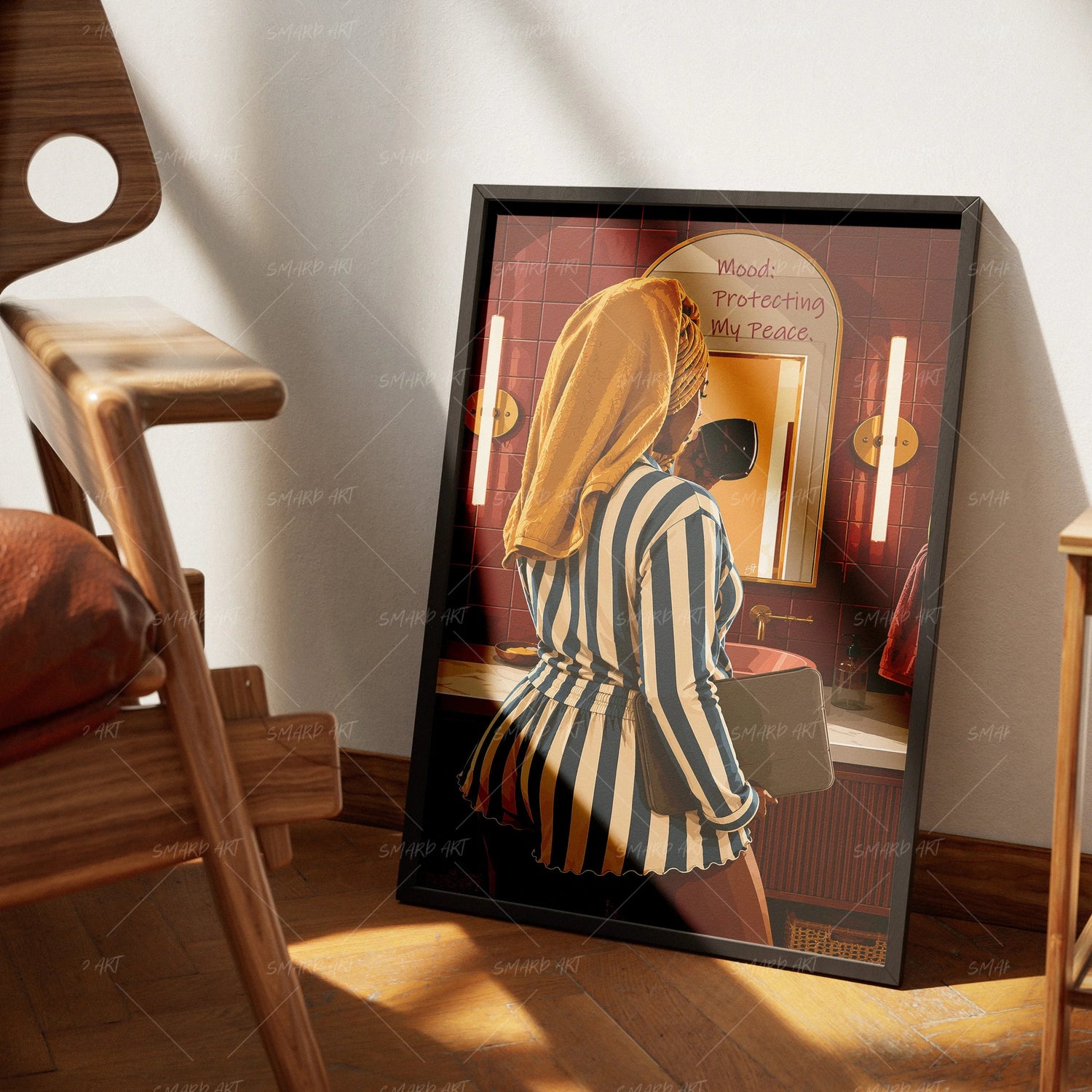
Finding artwork you love is exciting.
Finding out it's the wrong size after it arrives?
Not so much.
One of the biggest reasons homeowners regret buying wall art isn't because they chose the wrong design.
It's because they chose the wrong size.
Artwork that's too small can disappear on a large wall.
Artwork that's too large can overwhelm the room.
Fortunately, this mistake is easy to avoid.
Before you buy your next piece of Black wall art, taking a few simple measurements can help you choose artwork that fits your room beautifully and feels professionally styled from the moment it's goes on the wall.
Whether you're decorating a living room, bedroom, hallway, dining room, or home office, this guide will show you exactly how to measure your wall the right way.
The Quick Answer
Measure the width and height of your available wall space first.
If the artwork will hang above furniture, measure the furniture too.
Choose artwork that feels proportional to both the wall and the furniture, rather than filling every inch of available space.
Good sizing creates balance.
Why Measuring Matters
Many people shop with their eyes instead of a measuring tape.
They fall in love with artwork online and imagine it working perfectly in their home.
Only after it arrives do they realize it looks much smaller—or much larger—than expected.
Measuring first removes the guesswork.
It helps you:
- Choose the right size.
- Avoid unnecessary returns.
- Create better visual balance.
- Shop with greater confidence.
Five minutes of measuring can save years of wishing you'd chosen differently.
Step 1: Measure the Wall
Using a tape measure, record:
- Total wall width
- Total wall height
These numbers give you the maximum space available.
Don't worry about filling every inch.
The goal isn't to cover the wall.
The goal is to decorate it thoughtfully.
Step 2: Measure the Furniture
If your artwork will hang above furniture, the furniture becomes just as important as the wall.
Measure:
- Sofa width
- Bed width
- Console table width
- Dining buffet width
- Desk width
The artwork should relate to the furniture rather than floating independently above it.
This creates a more cohesive design.
Step 3: Identify the Focal Point
Ask yourself:
Where do I want people to look first?
If the artwork is intended to become the room's focal point, don't hide it among several competing decorations.
Large Black wall art often works beautifully because it naturally attracts attention while helping anchor the room.

Step 4: Visualize the Size
This is one of the easiest designer tricks.
Use painter's tape to outline the dimensions of the artwork directly on the wall.
Leave it there for a day.
Walk into the room several times.
Sit on the sofa.
Stand in different corners.
You'll quickly discover whether the artwork feels balanced before you buy it.
Step 5: Consider Viewing Distance
Artwork isn't viewed from only one position.
Think about how you'll experience it.
Will you mostly see it while:
- Sitting on the sofa?
- Walking down the hallway?
- Entering the room?
- Working at your desk?
- Eating at the dining table?
The farther away you'll typically view the artwork, the larger it usually needs to be.
Measuring for Different Rooms
Every room has different needs.
Living Room
Artwork above the sofa should generally span around two-thirds of the sofa's width.
This creates visual harmony between the furniture and the wall.
Bedroom
Artwork above the bed should feel centered and balanced without extending dramatically beyond the headboard.
Large statement pieces often create a calm, luxurious atmosphere.
Dining Room
Choose artwork that complements the dining table without dominating the room.
Leave enough surrounding wall space for the artwork to breathe.
Home Office
The artwork should inspire without becoming distracting.
A medium or oversized piece behind the desk often creates a polished appearance for both daily work and video calls.
Hallways
Hallways usually benefit from vertically oriented artwork or coordinated gallery walls that guide movement through the space.
Oversized Artwork Isn't Something to Fear
One of the biggest misconceptions is that large artwork only belongs in large homes.
In reality, oversized artwork often makes compact spaces feel more intentional.
Instead of breaking the wall into multiple small focal points, one larger piece creates visual simplicity.
Many interior designers recommend going slightly larger rather than slightly smaller.

Gallery Walls Require Measuring Too
Gallery walls aren't random.
Measure the overall arrangement before hanging individual frames.
Think of the gallery wall as one large artwork made up of several smaller pieces.
This helps you maintain balance while avoiding awkward gaps.
Common Measuring Mistakes
Avoid these common errors:
- Measuring only the wall and forgetting the furniture.
- Buying based on online photos alone.
- Hanging artwork too close to the ceiling.
- Ignoring viewing distance.
- Choosing artwork that's dramatically smaller than the available space.
Most sizing problems begin before the artwork is ever hung.
Why Black Wall Art Benefits From Proper Scale
Black wall art naturally creates contrast and draws attention.
That impact becomes even stronger when it's displayed at the correct size.
Portraits, cultural artwork, lifestyle scenes, and statement pieces deserve enough space to tell their story.
Choosing the right dimensions allows the artwork to become part of the room rather than getting lost within it.
Why Smard Art Makes Choosing Easier
At Smard Art, we understand that sizing is one of the biggest concerns when buying artwork online.
That's why our collections are available in multiple sizes, helping homeowners find artwork that suits everything from compact apartments to spacious family homes.
Our modern Black wall art celebrates culture, creativity, family, fashion, and everyday life while making it easier to create balanced, meaningful interiors.
Final Thoughts
Beautiful rooms don't happen by accident.
They begin with thoughtful planning.
Before buying your next piece of wall art, take a few minutes to measure your wall, your furniture, and the space where the artwork will live.
Those simple steps can make the difference between artwork that merely fills a wall and artwork that transforms an entire room.
Measure first.
Choose confidently.
Enjoy your artwork for years to come.
Frequently Asked Questions
How do I know what size wall art I need?
Measure both your wall and any furniture beneath the artwork. Choose a size that feels balanced rather than simply filling the available space.
Should wall art be centered on the wall?
When furniture is present, center the artwork in relation to the furniture rather than the entire wall.
Is larger wall art better?
For many rooms, yes. Larger artwork often creates a stronger focal point and makes the room feel more professionally designed.
How do I measure for a gallery wall?
Measure the entire planned arrangement rather than each frame individually. Think of the gallery wall as one complete composition.
Why does my wall art always look too small?
Most homeowners underestimate how much visual space artwork should occupy. Choosing a larger size often solves the problem immediately.
Explore More from Smard Art
Find the perfect size for every space:
- Black Wall Art
- Oversized Wall Art
- Living Room Wall Art
- Gallery Wall Collections
- Modern Wall Art
- Statement Wall Art
Discover artwork that fits your walls—and your story.

Leave a comment
This site is protected by hCaptcha and the hCaptcha Privacy Policy and Terms of Service apply.