



Decorating a living room is often about finding the right balance.
Too little décor can make the room feel unfinished.
Too much can make it feel crowded.
Wall art plays a major role in creating that balance, but one question comes up again and again:
How many pieces of wall art should a living room have?
The answer isn't a specific number.
Some living rooms look stunning with one oversized artwork.
Others come to life with a thoughtfully arranged gallery wall.
The right choice depends on your room, your furniture, and the story you want your home to tell.
Rather than counting pieces, professional interior designers focus on proportion, visual balance, and intentional placement.
Here's how to decide what works best for your space.
The Quick Answer
Most living rooms need one to three main wall art arrangements, not necessarily one to three individual pieces.
A single oversized artwork, a pair of coordinating prints, or one gallery wall can all create a beautiful result when they're scaled to the room and placed intentionally.
Start With the Main Wall
Before deciding how many pieces to buy, identify the wall that naturally attracts attention.
In many homes, this is:
- Above the sofa
- Above the fireplace
- The wall opposite the entrance
This wall usually deserves your strongest artwork because it becomes the room's focal point.
Once you've established this area, you can decide whether the rest of the room needs additional artwork.
One Large Piece Creates Maximum Impact
Many professionally designed living rooms feature just one oversized artwork.
This approach works particularly well if you prefer:
- Minimalist interiors
- Contemporary homes
- Scandinavian design
- Modern decorating
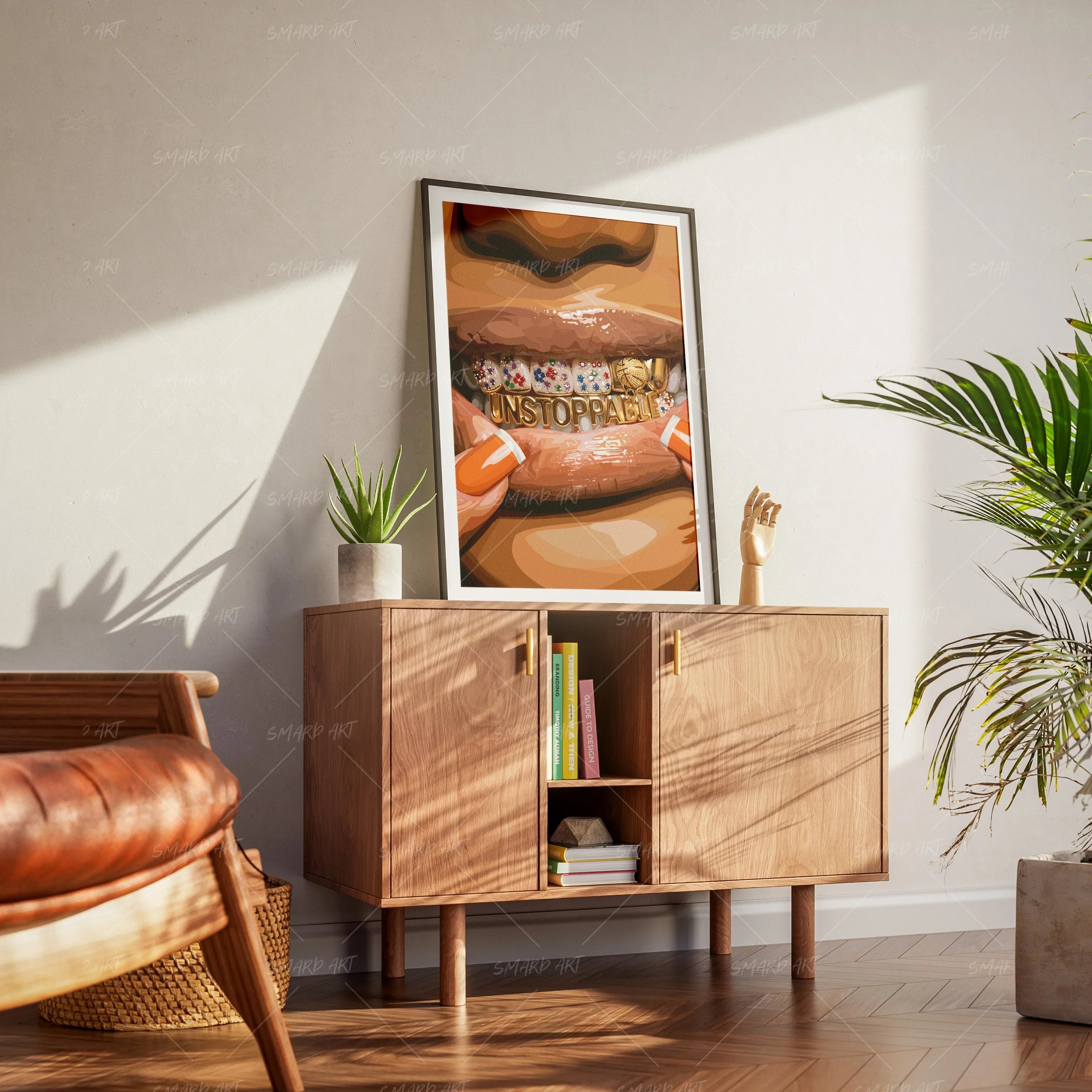
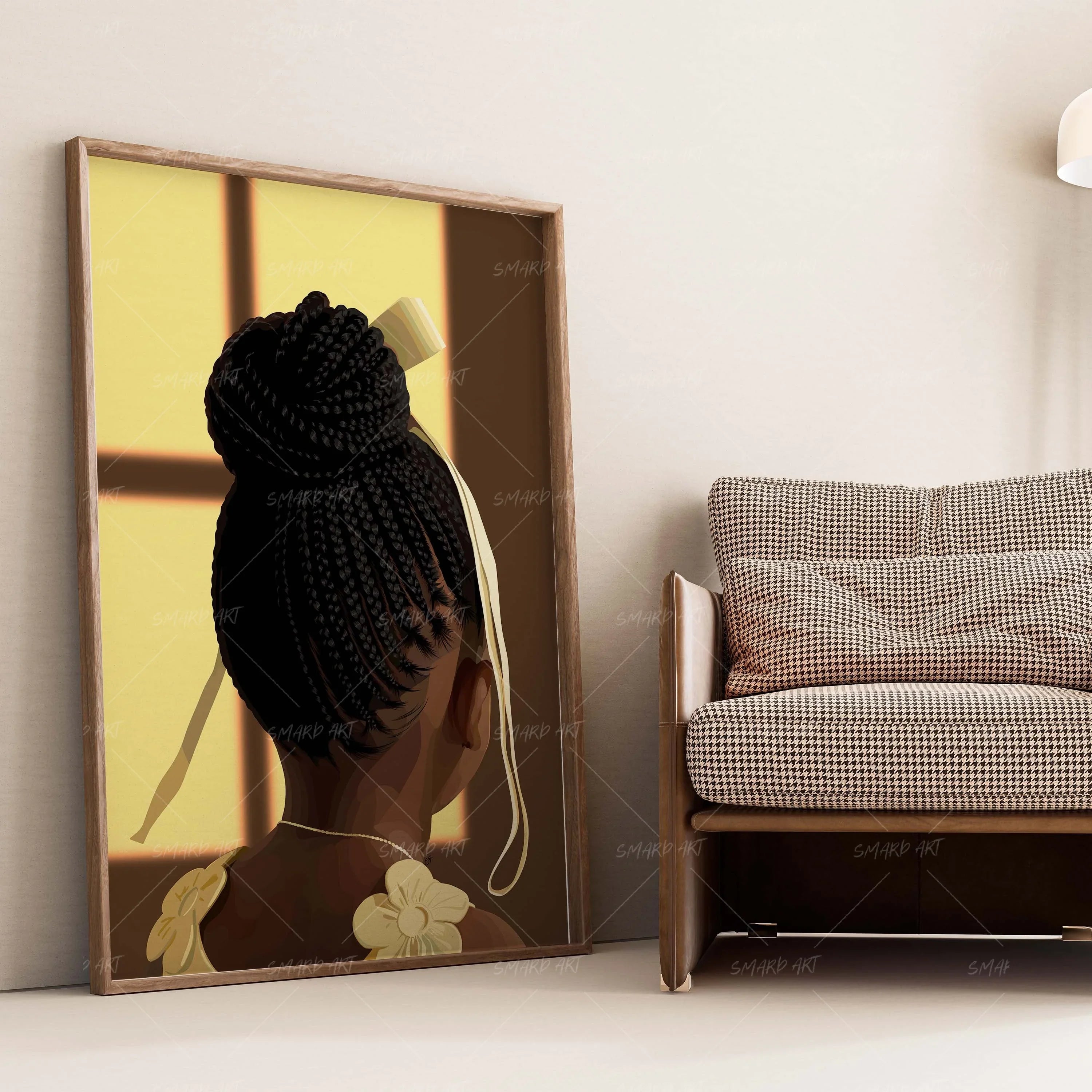
One large piece of Black wall art immediately anchors the room while reducing visual clutter.
Instead of competing with multiple decorations, the artwork becomes the star of the space.
Gallery Walls Tell Bigger Stories
If your goal is to showcase different aspects of your personality, a gallery wall may be the better option.
Gallery walls work beautifully when every piece shares a common theme.
Examples include:
- Black culture
- Family
- Music
- Fashion
- Travel
- Everyday life
Instead of asking how many pieces to include, think about the overall composition.
The arrangement should feel like one complete artwork rather than unrelated frames scattered across the wall.
Two or Three Coordinated Pieces
Some living rooms benefit from symmetry.
Two matching artworks above a sofa or three coordinated pieces arranged horizontally can create a balanced appearance without the complexity of a gallery wall.
This approach works particularly well in transitional and contemporary interiors.
Consider the Size of the Room
The number of artworks should always relate to the room itself.
Large living rooms can comfortably support multiple focal areas.
Smaller rooms often feel more spacious when decorated with fewer, larger pieces.
Adding too many small artworks can make compact spaces feel visually busy.
Think About What Else Is in the Room
Wall art doesn't exist on its own.
Consider how it interacts with:
- Windows
- Shelving
- Televisions
- Fireplaces
- Bookcases
- Architectural features
If the room already contains several visual focal points, one statement artwork may be all that's needed.
If the walls are mostly open, additional artwork can help create balance.
Leave Space Between Arrangements
Not every wall needs decoration.
Negative space allows artwork to breathe.
It also helps each arrangement stand out instead of competing for attention.
Professional interiors often feel luxurious because they resist the urge to fill every available wall.
Create Visual Balance
Imagine standing in the center of your living room.
Does one side feel significantly heavier than the other?
Artwork can help distribute visual weight throughout the room.
If one wall contains a large bookshelf, another wall may need only one statement piece.
Balance matters more than quantity.
Choose Quality Over Quantity
One meaningful artwork often has more impact than several decorative pieces chosen simply to fill space.
Instead of asking, "How many pieces do I need?"
Ask:
- Does this artwork reflect my personality?
- Does it strengthen the room?
- Will I still enjoy it years from now?
These questions usually lead to better decorating decisions.
Why Black Wall Art Works in Every Arrangement
Whether you choose one oversized artwork or a gallery wall, Black wall art naturally creates strong focal points.
Portraits, cultural artwork, lifestyle scenes, and modern illustrations introduce depth, contrast, and meaningful storytelling.
Rather than decorating for decoration's sake, you're creating a home that reflects your experiences and values.
Why Smard Art Collections Work Together
At Smard Art, our collections are designed with flexibility in mind.
Some pieces are intended to stand confidently on their own.
Others complement one another beautifully, making it easy to build gallery walls over time.
Whether your style is bold and minimalist or layered and expressive, our modern Black wall art helps create living rooms that feel personal and beautifully balanced.
Final Thoughts
There isn't one perfect number of wall art pieces for every living room.
The best answer depends on your space.
A single statement artwork can completely transform a room.
A gallery wall can tell a richer story.
Two or three coordinated pieces can create timeless symmetry.
Instead of focusing on quantity, focus on purpose.
When every artwork has a reason for being there, your living room naturally feels more welcoming, more cohesive, and more memorable.

Leave a comment
This site is protected by hCaptcha and the hCaptcha Privacy Policy and Terms of Service apply.