


You've probably experienced this with clothes.
Something looks perfect online.
You buy it.
You love it for two weeks.
Then one morning you look at it and wonder what exactly happened to your judgment.
Wall art can create the same problem.
Except returning a shirt to the back of your closet is considerably easier than ignoring a 30 × 40 artwork hanging above your sofa.
So how do you choose wall art you won't quickly get tired of?
The answer isn't to buy only neutral artwork.
It isn't avoiding trends completely.
And it isn't finding some mythical category of "timeless art" that everyone will love forever.
The goal is to understand why you're attracted to an artwork before you buy it.
Do you genuinely connect with it?
Or have you simply seen that style 47 times this week?
Here are 15 ways to choose artwork with a better chance of staying meaningful in your home.
The Quick Answer
To choose wall art you'll love longer:
- Buy art you genuinely enjoy
- Identify why you like it
- Avoid choosing only by room color
- Consider personal meaning
- Choose the correct size
- Think about future rooms
- Be selective with trends
- Don't rush to fill blank walls
- Consider where you'll see it every day
- Test dimensions before purchasing
- Build a collection slowly
- Mix styles when appropriate
- Choose framing thoughtfully
- Consider the artwork without its styled product photo
- Trust your taste more than decorating rules
1. Ask Why You Like the Artwork
Before buying, stop scrolling for a moment.
Ask yourself:
What exactly do I like about this?
Maybe it's:
The subject.
Colors.
Story.
Culture.
Mood.
Composition.
Humor.
Memory it triggers.
Artist's perspective.
If you can identify the connection, that's useful.
If the answer is simply "I've been seeing this style everywhere," wait.
2. Don't Buy Art Just Because It Matches Your Sofa
Your sofa is furniture.
Your artwork doesn't work for it.
A blue sofa doesn't require blue artwork.
A beige living room doesn't require beige art.
Instead, look for relationships.
Artwork might:
Repeat one room color.
Introduce contrast.
Add a new accent.
Connect several colors already present.
The artwork should belong in the room without becoming camouflage.
3. Think Beyond Your Current Furniture
Furniture changes.
People move.
Walls get painted.
Rugs wear out.
If you choose artwork solely because it perfectly matches your current room, what happens when the room changes?
Ask:
Would I still like this artwork in a completely different space?
If yes, that's a good sign.
4. Choose Subjects That Mean Something to You
Meaning doesn't have to be profound.
Maybe you love:
Basketball.
Fashion.
Cooking.
Travel.
Music.
Flowers.
Cars.
Family.
Faith.
Photography.
Culture.
Relationships.
Your interests are often more stable than decorating trends.
Use them.
5. Don't Confuse Timeless With Neutral
This is important.
Timeless doesn't automatically mean:
Beige.
Gray.
Minimal.
Abstract.
Quiet.
A bright red portrait could remain meaningful to you for decades.
A beige abstract could bore you within six months.
Longevity comes from connection, not lack of color.
6. Be Careful With Micro-Trends
Trends aren't bad.
They introduce us to new ideas.
The problem occurs when repetition gets mistaken for preference.
You see a particular artwork style everywhere.
Suddenly, it feels essential.
Before buying, imagine you hadn't seen it on social media.
Would you still want it?
That's a useful test.
7. Give Yourself Time
You don't need to purchase artwork the first time you see it.
Save it.
Return a few days later.
Still thinking about it?
Good.
Still like it after comparing other pieces?
Even better.
The internet creates artificial urgency around decorating.
Your wall can wait.
8. Choose the Right Size
You can love an artwork and still dislike how it looks in your room if the scale is wrong.
Before ordering, measure:
Wall width.
Furniture width.
Available height.
Nearby objects.
Then use painter's tape to outline the proposed artwork size.
Step back.
Look from across the room.
Scale can dramatically change how artwork feels.
9. Consider Where You'll See It Most
Artwork above a sofa may be visible from several rooms.
Bedroom artwork may be the first thing you see in the morning.
Office artwork might sit directly behind your computer.
Think about frequency.
The more often you'll see the artwork, the more important genuine preference becomes.
10. Don't Decorate Every Wall at Once
An empty wall isn't an emergency.
Leave it empty until you find something worth putting there.
Rushing often leads to placeholder art.
Then the placeholder stays for six years because replacing it becomes another task.
Buy slowly.
11. Build an Art Collection Instead of Buying "Wall Decor"
This mindset changes everything.
"Wall décor" asks:
What will fill this space?
An art collection asks:
What do I want to keep?
The second question tends to produce a more personal home.
Your collection can include:
Prints.
Canvas.
Photography.
Original artwork.
Family photographs.
Posters.
Vintage pieces.
Illustrations.
They don't all need to match.

12. Choose Art That Starts Conversations
Think about artwork people naturally ask about.
"Where did you get that?"
"What does that mean?"
"That reminds me of..."
Conversation-worthy artwork often contains something distinctive.
A story.
A cultural reference.
An unusual subject.
A personal connection.
Those qualities can help artwork remain interesting longer.
13. Think About Cultural Connection
Art can do more than coordinate a room.
It can reflect:
Identity.
Heritage.
Community.
History.
Everyday life.
Representation.
That can create a deeper relationship between artwork and home.
For many people, seeing themselves or their experiences reflected in their surroundings matters more than following whatever color palette is currently popular.
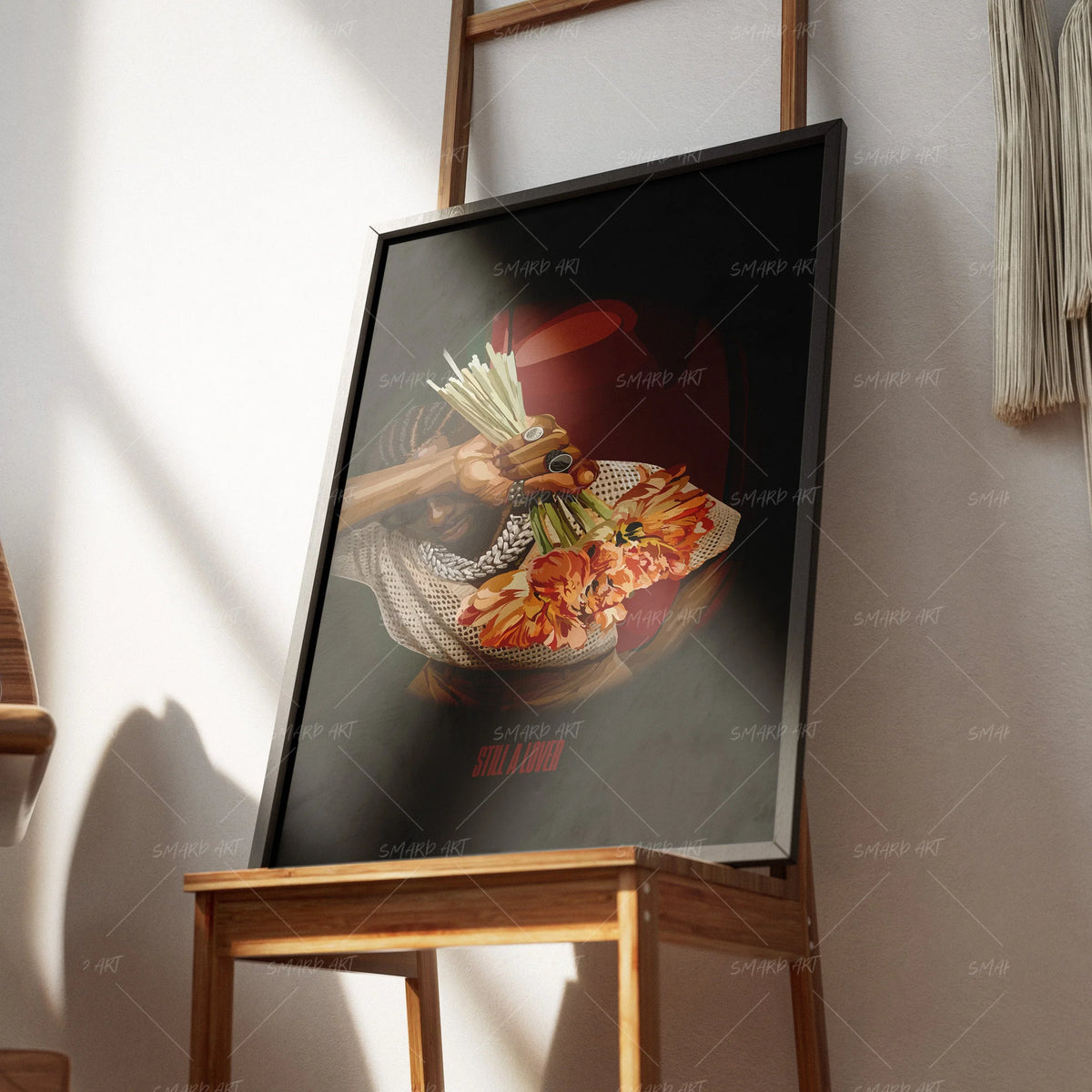
14. Choose Frames for Flexibility
If you're buying prints, framing can help artwork adapt over time.
The same print may feel completely different in:
Black.
Natural wood.
Dark wood.
White.
Metal.
Changing the frame later can refresh the artwork without replacing it.
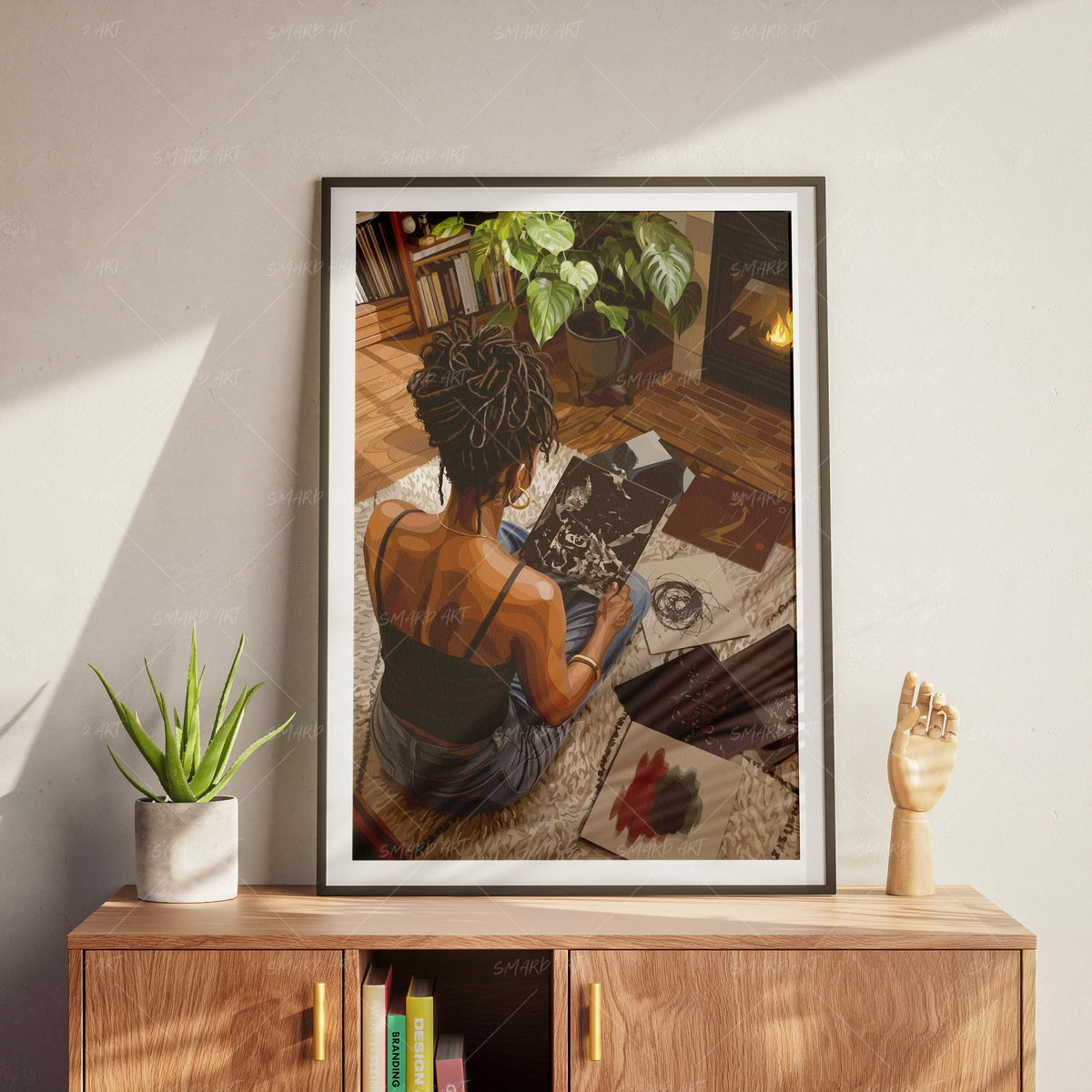
15. Imagine the Artwork Without the Styled Room
This is one of the best online-shopping tests.
Product photography can be persuasive.
Beautiful sofa.
Perfect lighting.
Designer coffee table.
Huge windows.
Then there's the artwork.
Ask yourself:
Do I love the artwork, or do I love the room around it?
Mentally remove everything else.
Would you still buy the piece?
If yes, you're probably responding to the art itself.
How Do You Know What Wall Art Style You Like?
Start by looking for patterns.
Save 10–20 artworks you genuinely like.
Then compare them.
Do they share:
Bold color?
Portraiture?
Photography?
Black-and-white imagery?
Fashion?
Nature?
Abstract shapes?
Culture?
Minimalism?
Humor?
Your preferences may be more consistent than you realize.
You don't necessarily need a label such as "modern eclectic contemporary."
You simply need to recognize what attracts you.
How to Choose Wall Art for a Living Room
Living rooms are shared spaces, so consider:
Scale.
Viewing distance.
Furniture.
Existing colors.
Other artwork.
The atmosphere you want.
Because living rooms often have larger walls, don't automatically choose small artwork.
One substantial piece can sometimes create a stronger result than several smaller decorations.
How to Choose Wall Art for a Bedroom
Bedrooms can be more personal.
Consider artwork related to:
Relationships.
Faith.
Calm.
Beauty.
Fashion.
Photography.
Culture.
Personal memories.
You don't need to choose something that every visitor would appreciate.
It's your bedroom.
How to Choose Wall Art for a Dining Room
Dining rooms are natural places for artwork centered around:
Food.
Family.
Culture.
Gathering.
Travel.
Music.
Photography.
Abstract art.
But don't feel restricted to dining-related subjects.
The best artwork is still something you want to look at.
How to Choose Wall Art for an Office
Office art can reflect:
Ambition.
Creativity.
Culture.
Motivation.
Interests.
Travel.
Professional identity.
Avoid filling the space entirely with motivational quotes unless you genuinely enjoy them.
Sometimes one powerful visual says more.

How to Choose Wall Art Colors
There are several approaches.
Repeat
Choose artwork containing colors already in the room.
Contrast
Introduce a color that stands against the existing palette.
Bridge
Choose artwork containing several colors already present.
Lead
Let the artwork establish the room's palette.
There isn't one correct method.
Does Wall Art Have to Match Your Decor?
No.
It should relate.
Matching and relating are different.
A green artwork doesn't require green cushions.
A black-and-white photograph can work in a colorful room.
A vibrant portrait can work in a neutral room.
Your eye needs enough connection to understand the composition.
It doesn't need identical colors everywhere.
What Wall Art Never Goes Out of Style?
No artwork can be guaranteed to remain universally fashionable.
Trends change.
Instead, focus on subjects and styles that remain personally meaningful.
Examples might include:
Portraiture.
Photography.
Abstract art.
Landscapes.
Cultural artwork.
Family photography.
Botanical imagery.
Art connected to personal interests.
The important word isn't "timeless."
It's personal.
Black Wall Art and Long-Term Meaning
Contemporary Black wall art can offer something beyond decoration.
Artwork exploring Black:
Family.
Love.
Fashion.
Hair.
Music.
Food.
Faith.
Sports.
Culture.
Leisure.
Everyday life.
can create recognition and cultural connection within a home.
That connection isn't dependent on whether a particular interior-design trend remains popular.
Meaning can give artwork longevity.
Should You Buy Trendy Wall Art?
You can.
If you genuinely like it.
There's no rule saying every purchase must survive thirty years.
Sometimes something is fun because it reflects a specific moment.
Just distinguish between:
I like this trend.
and
I'm seeing this trend everywhere, so I think I'm supposed to like it.
That's the difference.
How Much Wall Art Should You Have?
There isn't a correct number.
Some people love gallery-filled homes.
Others prefer one artwork per room.
Look at:
Wall space.
Furniture.
Architecture.
Visual activity.
Personal preference.
You don't need artwork on every wall.
Negative space helps art stand out.
How to Buy Wall Art Online Without Regretting It
Before purchasing:
Check dimensions.
Measure your wall.
Review available formats.
Understand whether framing is included.
Look carefully at artwork colors.
Read product information.
Check return policies.
Visualize the artwork without the staged room.
Use painter's tape to test size.
Don't rely entirely on product mockups for scale.
Measurements are more reliable.
A Simple Wall Art Buying Checklist
Before clicking "buy," ask:
Do I genuinely like the artwork?
Can I explain what I like about it?
Is the size right for my wall?
Would I like it if my furniture changed?
Do I understand what format I'm buying?
Do I have somewhere specific to hang it?
Would I still want it if it wasn't trending?
You don't need seven yeses.
But if you have seven nos, maybe close the tab.
Common Wall Art Buying Mistakes
Buying only to fill space
Wait for something better.
Choosing the smallest size automatically
Measure first.
Matching every room color
Allow contrast.
Buying because something is trending
Check whether you genuinely like it.
Ignoring dimensions
Mockups can distort perceived scale.
Buying an entire collection at once
Let your taste develop.
Assuming neutral means timeless
Meaning matters more than beige.
Forgetting framing
Consider the complete presentation.

Why Smard Art Focuses on More Than Matching a Room
Smard Art creates contemporary artwork inspired by Black culture, family, relationships, creativity, fashion, faith, food, music, sports, leisure, and everyday experiences.
Those subjects give people more ways to choose artwork based on what resonates with them rather than simply what matches their sofa.
Maybe you see your relationship in a piece.
Your culture.
Your music taste.
Your style.
Your family.
Something familiar from everyday life.
When artwork connects with something beyond decorating, there's often more reason to keep looking at it.
Final Thoughts
Choosing wall art you won't get tired of isn't about predicting future trends.
You can't.
Your taste will change too.
Instead, choose more deliberately.
Ask why you like something.
Measure your space.
Don't rush.
Separate genuine preference from repeated exposure.
Choose subjects connected to your life.
Allow your collection to develop.
And remember:
Your artwork doesn't need to impress everyone who enters your home.
You're the person who has to look at it every day.
Choose accordingly.
Frequently Asked Questions
How do I choose wall art for my home?
Consider your personal taste, available wall space, artwork size, room colors, subject matter, placement, and whether the piece has enough meaning or visual appeal to remain interesting to you.
How do I choose wall art I won't get tired of?
Choose artwork based on genuine personal preference rather than trends alone. Consider subjects, colors, culture, memories, interests, and styles that have consistently appealed to you.
Does wall art need to match furniture?
No. Artwork can repeat room colors, introduce contrast, bridge several colors, or establish an entirely new accent. It should relate to the room rather than perfectly match it.
What wall art is timeless?
No artwork is universally timeless. Portraiture, photography, landscapes, abstracts, cultural art, botanical imagery, and personally meaningful pieces can have longevity when they reflect your genuine taste.
Should all the wall art in my house match?
No. An art collection can mix subjects, styles, colors, frames, and mediums. Repetition of certain colors, themes, or finishes can create cohesion without making every piece match.
How do I choose wall art online?
Measure the intended wall, review the exact artwork dimensions and format, understand whether framing is included, test the size with painter's tape, and evaluate the artwork independently from its styled product photography.
Is Black wall art timeless?
Black wall art can have long-term personal value when it connects with culture, family, relationships, music, fashion, faith, food, or other meaningful experiences. Longevity depends more on personal connection than a particular decorating trend.


Leave a comment
This site is protected by hCaptcha and the hCaptcha Privacy Policy and Terms of Service apply.